Emily Newman

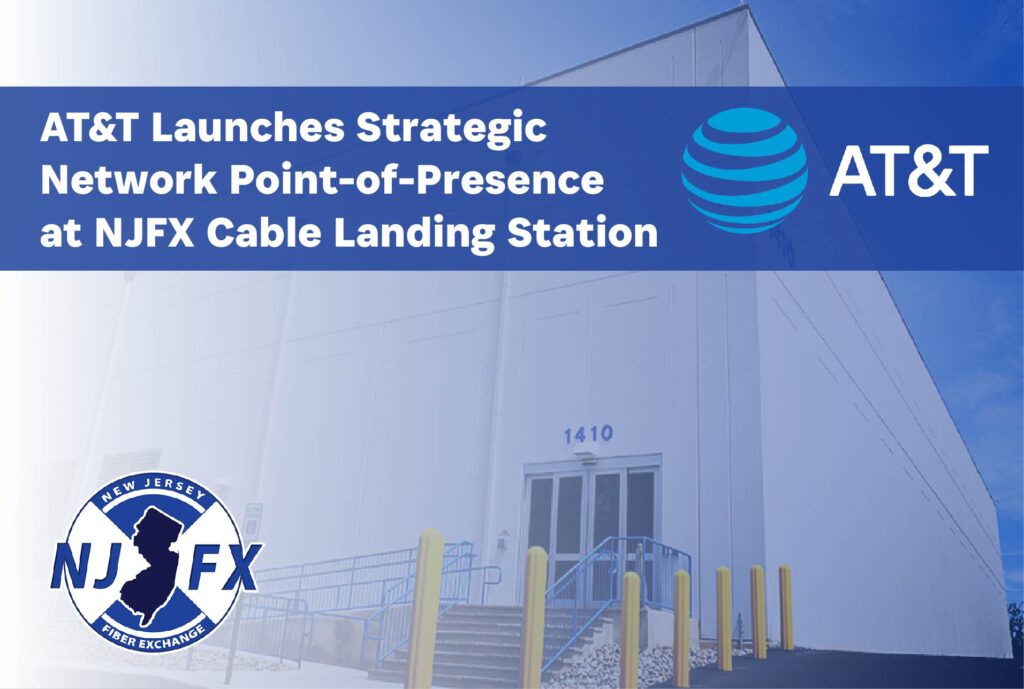
AT&T Launches Strategic Network Point-of-Presence at NJFX Cable Landing Station

AT&T Launches Strategic Network Point-of-Presence at NJFX Cable Landing Station

AT&T Launches Strategic Network Point-of-Presence in Wall, NJ

May 5, 2022

WALL TOWNSHIP  – AT&T* recently added a network Point-of-Presence (PoP) within the NJFX Cable Landing Station (CLS) colocation campus located in Wall, NJ. This strategic deployment provides access to AT&T’s domestic and global network and helps increase network efficiency for customers.

We will offer services from our Ethernet and transport portfolio including AT&T Virtual Private Network, Ethernet Private Line Service, OPT-E-WAN, and AT&T Dedicated Internet/Managed Internet Service for speeds up to 100G.

The new PoP will provide access for customers to directly interconnect with subsea capacity services across the Atlantic to Europe and Latin America. International-based customers can transport data to AT&T’s PoP and extend their reach to major U.S. metro markets via their robust U.S. backbone system. Customers can also interexchange traffic across the multiple subsea cable systems available at NJFX, including TGN1, TGN2, and Seabras.

“We are continually looking for ways to strategically expand our offerings to customers,” said Michael DeChiara, Associate Vice President, AT&T Wholesale Solutions. “Through our new Point-of-Presence at NJFX, we have added another critical location to address customer’s growing requirements for access to our advanced and powerful global network, including our extensive fiber footprint in the U.S., which is now available coast-to-coast for wholesale customers.”

“We are pleased that AT&T has chosen to establish a Point-of-Presence at our CLS colocation campus, states Gil Santaliz, CEO of NJFX. “It has always been our vision to develop NJFX to become North America’s preeminent international hub for subsea communications, interconnecting many international carriers across three continents with multiple secure and reliable backhaul and U.S. termination options. World-class communications providers like AT&T recognize that NJFX provides a nexus for collaboration where they can build out new and reinforce existing networks with diverse routes while extending their global reach.”

*About AT&T

We help more than 100 million U.S. families, friends and neighbors connect in meaningful ways every day. From the first phone call 140+ years ago to our 5G wireless and multi-gig internet offerings today, we @ATT innovate to improve lives. For more information about AT&T Inc. (NYSE:T), please visit us at about.att.com. Investors can learn more at investors.att.com.

###

About NJFX:

NJFX is a Tier 3 Carrier Neutral Cable Landing Station campus. Our colocation ecosystem has expanded to over 35 network operators offering flexibility, reliability, and security. Our Wall, NJ location provides direct access to multiple subsea cable systems giving our carriers diverse connectivity solutions and offers direct interconnection without recurring cross-connect fees.

For NJFX media inquiries, please contact: emily@njfx.net

AT&T Launches Strategic Network Point-of-Presence at NJFX Cable Landing Station Read More »

NANOG 85

Join us in Montreal, Quebec for NANOG 85!

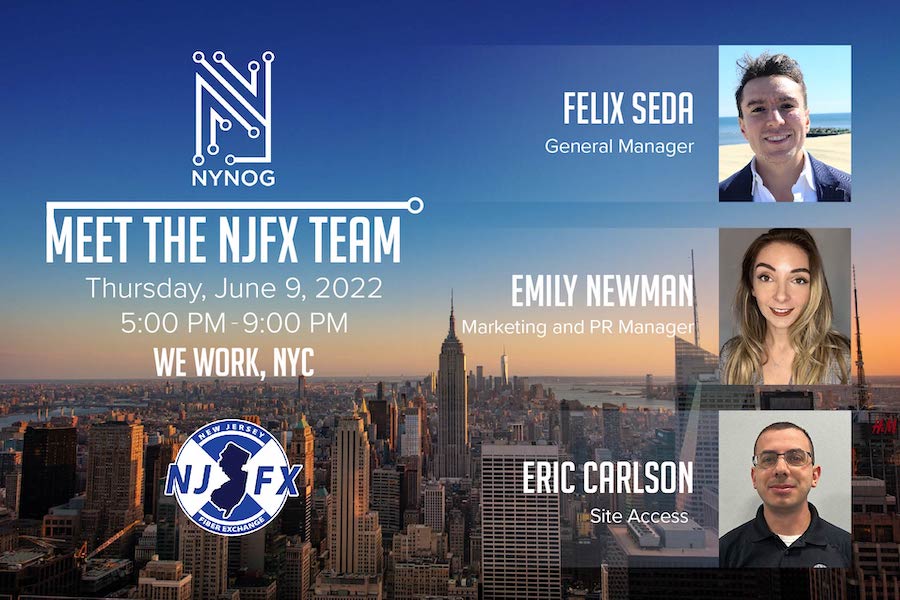
Schedule a time to chat with the NJFX’s team, Felix Seda and Emily Newman.

See you soon!

Request A Meeting With Us!

Events

CDS

Content Delivery Summit

Content Delivery Summet 2021 Now in its 14th year, the Content Delivery Summit is the longest-running conference focusing on the confluence of the technology and

Meet Us »

Capacity LATAM 2021

Capacity LATAM is the largest and most senior annual event driving future connectivity across the Latin American region. It is the event that defines Latin

Meet Us »
ITW21

ITW 2021

ITW 2021 International Telecoms Week brings together the enablers and innovators in the entire connectivity ecosystem. At ITW 2021 not only are we providing attendees

Meet Us »

NANOG 85 Read More »

LEGACY INFRASTRUCTURE BYPASS

Legacy Infrastructure Bypass

New Federal Grants Aim to Bolster Telecom’s ‘Middle Mile’

July 22, 2022

Wall Township, NJ – While most people associate take for granted how much the Internet has become embedded in modern life, the team at NJFX realizes the importance of the need for an updated telecommunications infrastructure and the vulnerabilities of legacy networks. The U.S. Department of Commerce’s National Telecommunications & Information Administration (NTIA) has launched a new grant program to encourage the development to improve the resiliency of broadband networks and improve access.

Working from home, streaming videos/gaming, and just about any aspect of commerce touches upon the Internet. The Internet of Things adds additional points of contact to telecommunications networks beyond computers, phones, and tablets. COVID-19 has considerably changed our lives and made the Internet a bigger part of them. We are shaping the Internet without being fully aware of the crucial infrastructure that impacts today and beyond.

Crises Drove Evolution of Data Centers

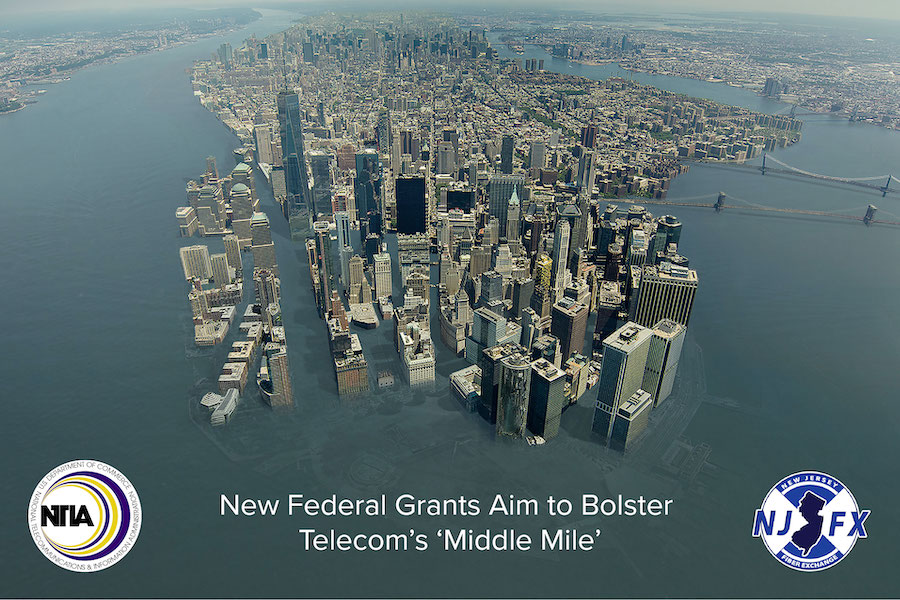
COVID-19 has helped accelerate a push to cloud computing and has revealed the need to improve the “middle mile” – the points of national and regional telecommunications networks that link-local networks. The global pandemic sent “information economy workers” home in 2020, changing how businesses will manage employees virtually. COVID-19 changed our understanding of working remotely along with an increasing expansion of the Internet while IoT still maturing. Legacy infrastructure, in lower Manhattan, is now supporting critical Internet traffic between ISPs in favor of cable companies and our U.S. wireless network operators. These legacy facilities are owned by real estate landlords who are unaware of how critical their role is in our society.

COVID-19, however, was not the only one to drive changes in telecommunications.

Back in the late 90’s, as the Internet was starting to become a force in commerce, most data centers were housed in brick-and-mortar office spaces with equipment fully accessible to anyone working on-site.  After the 9/11 attacks, the telecommunication industry realized data centers cannot be sitting in office buildings without security measures. New York City and the data flowing through it could not be the single point of failure for the business community. This began the journey of distribution and storage for shared data center space applications for computing. Equinix and a few other industry veterans started to create shared data centers that helped economically and diversified creating an environment with remote telecommunications infrastructure separated from employment buildings. The era of shared data centers shaped our country’s future of how we use the internet for the next ten years.

Even those changes could not overcome mother nature. In 2012, Hurricane Sandy slammed the East Coast affecting thousands of businesses and residents, cutting off electricity throughout the Northeast for days, leaving Lower Manhattan submerged during the height of the storm. The storm, which has been described as a once-in-a-700-year event, proved how dependent our global economy is on the critical infrastructure that is placed in lower Manhattan and Northern Jersey. The tragic events, since 2000, created a realization to diversify away from legacy points with subsea cables connecting Europe and the Americas.

A few years later, we started NJFX in Wall, N.J. NJFX serves over thirty carriers interconnecting Europe, North America, South America, and the Caribbean through the four subsea cables that are on campus. Today, Virginia Beach Cable Landing Station is working to expand the carrier community over subsea cables.  Technology companies, such as Google, Facebook, Microsoft, and Amazon, are also developing new subsea projects. Other landing sites and newer, higher capacity undersea fiber is helping to link global telecommunications networks, while building some resiliency to that “middle mile.”

Federal Grants to Bolster Middle Mile Infrastructure

The United States Government is aware of critical legacy infrastructure and needs diversification to build additional redundancy in the “middle mile.” Both ends of the middle mile are how users get to their applications through WAN services, private line networks, and cloud networks to shuttle information between destinations. The Middle Mile is becoming a critical part of how we connect with our remote workers, essential employees, and our families through various applications, data, and basic everyday functions that the internet provides.

The NTIA, which oversees the grants under the Infrastructure Investment and Jobs Act, is offering grants to technology companies and electric and telecommunications utilities. The grant program prioritizes projects that leverage existing infrastructure, enable connection of unserved communities, encourage the development of carrier-neutral interconnection facilities, and improve redundancy/resilience while reducing regulatory and permitting barriers.

“It is likely that NTIA’s final rules will permit funds awarded under this program to be used for a host of projects, including laying fiber to expand and extend existing networks, leasing dark fiber, connecting data centers, building wireless microwave backhaul infrastructure, and other similar projects,” the administration said.

To learn more about the Middle Mile Grant, click here.

###

About NJFX:

NJFX is a Tier 3 Carrier Neutral Cable Landing Station campus. Our colocation ecosystem has expanded to over 35 network operators offering flexibility, reliability, and security. Our Wall, NJ location provides direct access to multiple subsea cable systems giving our carriers diverse connectivity solutions and offers direct interconnection without recurring cross-connect fees.
More In the News

LEGACY INFRASTRUCTURE BYPASS Read More »

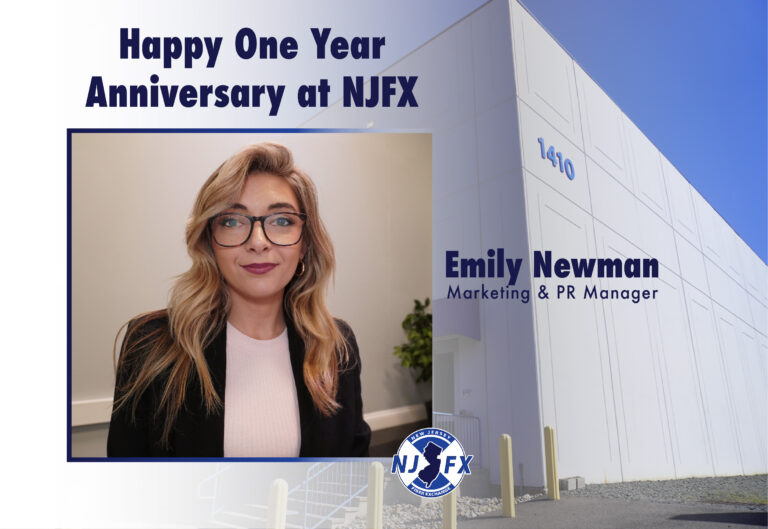
Emily Newman Hired at NJFX

NJFX Hires Emily Newman

NJFX Hires Emily Newman

Emily Newman

Marketing & PR Manager

April 1, 2022

Emily Newman Hired at NJFX

Wall Township, NJ – NJFX announces Emily Newman as our in-house Marketing and Public Relations Coordinator. Previously, she worked with various clients on projects that span from digital marketing, graphic design, and web development.  

We are thrilled to have Ms. Newman’s fresh perspective and her creative approach to connecting with our community of network operators. We took our time in finding the right fit for someone to join our team with a combination of enthusiasm, professionalism, and polish to represent our brand at NJFX said Gil Santaliz, CEO of NJFX.

The entire team at NJFX is excited to accompany Emily Newman on the journey to learn the dynamic subsea industry and build a powerful foundation for her and other young women in the infrastructure space. It was only 7 years ago when I transitioned from the Financial Services industry to NJFX and I see the passion Emily brings to our team and desire to be part of our industry, shared Felix Seda our GM. Felix has been a leader in our industry for Diversity and Inclusion and getting the next generation ready for new leadership roles recognized by his participation with PTC and the Suboptic in these efforts.

Ms. Newman graduated from Wagner College in Staten Island with a degree in Arts Administration and Marketing. She credits her studies with sparking her interest in digital media and marketing which led her to NJFX. 

“I am always looking for new challenges to educate myself on topics I am not familiar with,” Ms. Newman talks about how the telecommunication industry is a new and exciting venture she looks forward to exploring.

The move from web development to public relations has proven to be exciting for Ms. Newman. “In web development, it is normally me working alone with little communication. However, in the subsea industry, there is a huge emphasis on networking, continuous partnerships, and opportunities to learn from industry leaders.”

“As a young woman, I find this to be a massive motivator than a challenge to learn quickly from others and stand out as a leader in a male dominated field,” Ms. Newman explains how being a woman often makes her a minority in many of these conferences and at the office.

Ms. Newman has traveled with NJFX to Capacity LATAM and met many prominent women in the telecom industry and will use future opportunities to develop professional and personal relationships.

Say hello to Emily Newman at ITW, May 9 – 12, in Washington, DC.

###

About NJFX:

NJFX is a Tier 3 Carrier Neutral Cable Landing Station campus. Our colocation ecosystem has expanded to over 35 network operators offering flexibility, reliability, and security. Our Wall, NJ location provides direct access to multiple subsea cable systems giving our carriers diverse connectivity solutions and offers direct interconnection without recurring cross-connect fees.

More In the News

NJFX Hires Emily Newman Read More »

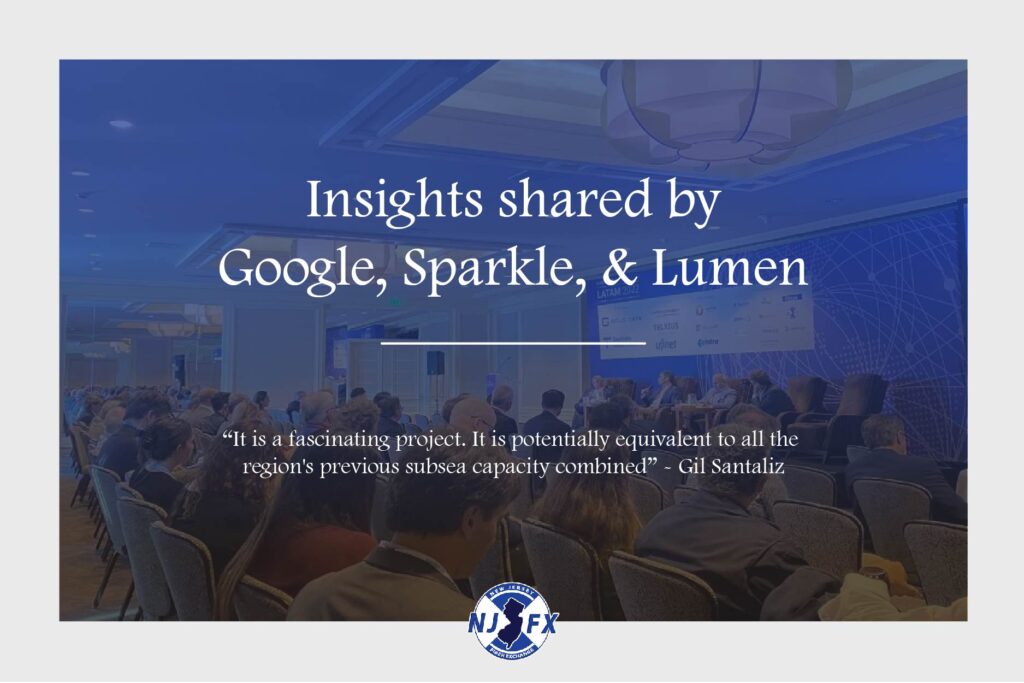
Insights Shared by Google, Sparkle, Lumen

Insights Shared by Google, Sparkle, & Lumen

Dive into this year’s Capacity LATAM session moderated by Gil Santaliz exploring new ventures in subsea cable systems

Gil Santaliz

CEO

March 15, 2022

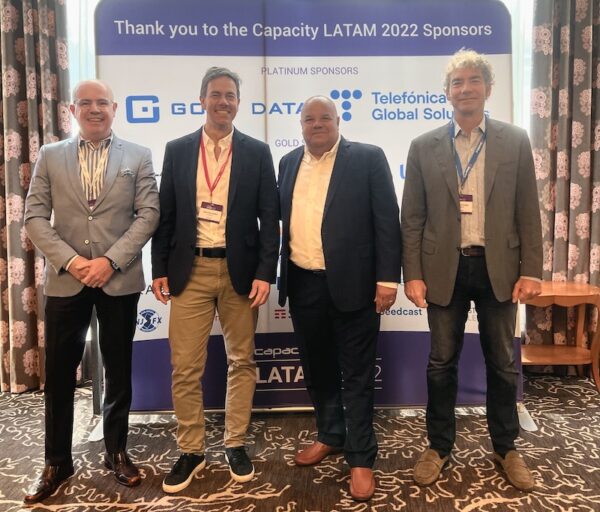
Capacity LATAM 2022 Conference Fireside Chat
From left to right:
Gabriel Holgado, Cristian Ramos, Gil Santaliz, Federico Porri

Capacity LATAM 2022 Conference was live in Miami with industry leaders networking and connecting in person for the first time in over two years due to the pandemic. The future of exploring transformative subsea projects was the main topic of a discussion moderated by Gil Santaliz, CEO of NJFX.

Subsea Keynote Panelists include:

Gil Santaliz, CEO | NJFX
Cristian Ramos, Network Development Manager | Google
Gabriel Holgado, Vice President of Sales | Lumen Technologies
Federico Porri, CTO | TI Sparkle

Each panelist shared their challenges, benefits, and advice going forward within the industry. NJFX CEO Gil Santaliz highlighted key issues the subsea industry faces and how this diverse panel overcomes new challenges.

Capacity LATAM, which had 700 attendees from 40 nations, is made up of a diverse set of companies that cannot exist without each other. In the telecommunication industry, there are many forms of partnerships, projects, markets, and joint ventures.

“This industry relies on long-term partnerships. It’s important to have a commitment and trust on both sides. Both sides are taking a calculated risk and keeping open communication is key,” Federico Porri, Chief Technology Officer of TI Sparkle, said. “Being able to gain trust and maintain trust and long-term partnerships is super important to us. If those variables are there, we look to accommodate partnerships.”

Traditionally, consortium subsea cables to Latin America had many partners. In the last five years, the groups have reduced in size and some cables have been announced with just one owner. Firmina and Curie, both of which are owned by Google are examples of this new paradigm. The Firmina cable is going to be the biggest high-count cable in the U.S. and South America.

“It is a fascinating project. It is potentially equivalent to all the region’s previous subsea capacity combined,” Santaliz added.

“One of the biggest decisions we had to make was landing it in South Carolina. The other big challenges the subsea industry is going to start facing is how to start to diversify landing points and build more reliable anchorages,” Cristian Ramos, Network Development Manager of Google said.

Cristian Ramos added, “Another big decision was putting a 18KV PFE for a very long distance cable. That is the first cable that will have the technology built in and it’s how we can minimize the time to build. This cable will link Argentina to the U.S., but it will have connections to Uruguay, Las Toninas, and Praia Grande.”

When asked about whether Firmina is going to change the fiberoptic landscape of Latin America, Gabriel Holdago, vice president of sales at Lumen, replied, “It is a significant technological breakthrough for the region and the economy, the contribution having these countries being connected and getting traffic connectivity and content. The contributions are huge – a lot of opportunities and for the new generations there is a lot of internships and innovation.”

“There is a project called Confluence that is being built and it connects Boca Raton to Jacksonville, Myrtle Beach, Virginia Beach, and to NJFX in Wall, New Jersey. It’s going to solve a U.S. issue, we have already seen a lot of the banks talking about critical rings in the U.S.,” Santaliz said.

Santaliz asked, “Are there going to be any more of these projects we haven’t seen before that actually land in LATAM to be commensurate with all the new infrastructure being built?”

“There are a number of cables in the Caribbean area that are going to be the end of life in a few years and of course, Sparkle will be a part of all new development projects,” Federico Porri said. “When you see the development of the subsea system in the region the next step is how to get additional redundancy. You have the ability to add terrestrial over your subsea and over time create small rings. What I foresee is to continually develop the terrestrial and subsea infrastructure in order to not only get redundancy at those stations.” Porri added that the objective is to add capacity in smaller cities as an additional next step.

At the end of the conference, Holdago updated the conference attendees about Lumen’s  $2.7 billion sales of its Latin American business to Stonepeak.  The agreement includes reciprocal reselling and network arrangements to enhance each other’s fiber footprints, data centers, and network assets.

Holgado adds, “All the subsea systems, terrestrial cables, all the networks, cable station, the data center will be a part of this new company. We will announce a new company in Latin America and a new brand running the LATAM operation. It is a strategic partnership between Lumen and the NewCo in order to rely on the services that we both require on both regions and vice versa.“

At the close of the panel, Santaliz asked the audience about their preferences regarding where to hold next year. COVID restrictions prompted organizers to host it in Miami, but attendees seemed most enthused about bringing it back to Brazil.


###

About NJFX:

NJFX is a Tier 3 Carrier Neutral Cable Landing Station campus. Our colocation ecosystem has expanded to over 35 network operators offering flexibility, reliability, and security. Our Wall, NJ location provides direct access to multiple subsea cable systems giving our carriers diverse connectivity solutions and offers direct interconnection without recurring cross-connect fees.

Insights Shared by Google, Sparkle, Lumen Read More »

SUSTAINABLE SUBSEA AT NJFX

Sustainable Subsea at NJFX

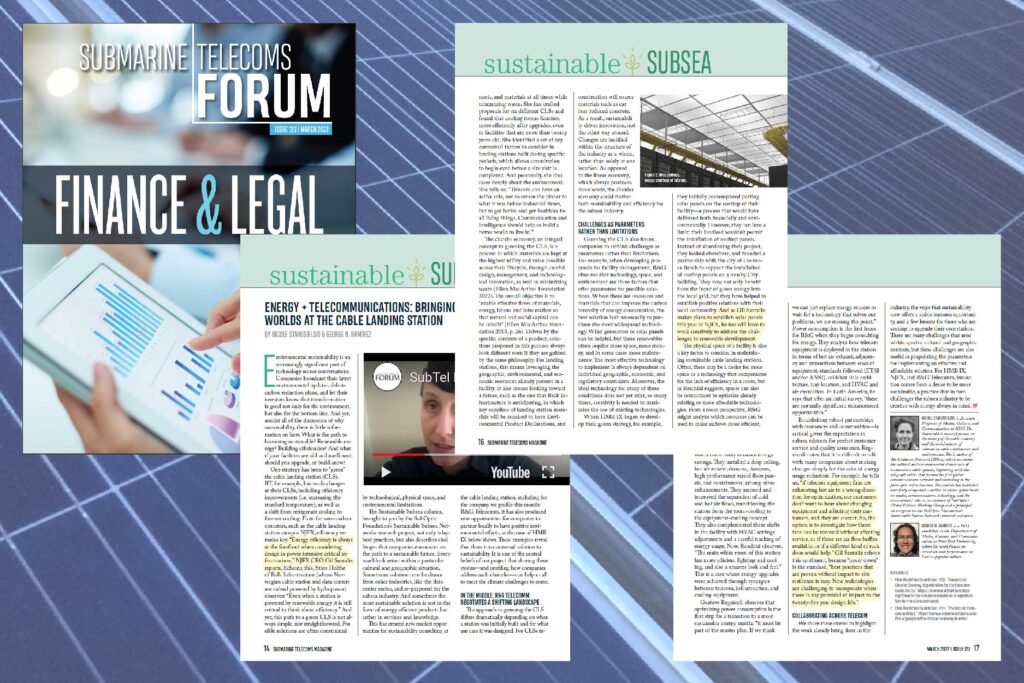
Energy + Telecommunications: Bringing together worlds at the Cable landing station 

SubTel Forum Magazine #123 – Finance & Legal

Published on 

Even for zero-carbon operators, such as the cable landing station campus NJFX, efficiency remains key.

“Energy efficiency is always at the forefront when considering design in power intensive critical infrastructure,” NJFX CEO Gil Santaliz reports.

And as Gil Santaliz makes plans to establish solar panels this year at NJFX, he too will have to work creatively to address the challenges to renewable development.

“if telecom equipment fans are exhausting hot air to a wrong direction for optimization, our customers don’t want to hear about changing equipment and affecting their customers, and they are correct. So, the option is to investigate how those fans can be reversed without affecting service, or if there are air flow baffles available, or if a different kind of rack door would help.”

Gil Santaliz echoes this sentiment: because “never down” is the standard, “best practices that are proven without impact to site resilience is easy. New technologies are challenging to incorporate when there is any potential of impact to the twenty-five year design life.”


Click here to read the full article about Sustainable Subsea.

Click here to read this months issue of SubTel Forum Magazine.

###

About NJFX:

NJFX is a Tier 3 Carrier Neutral Cable Landing Station campus. Our colocation ecosystem has expanded to over 35 network operators offering flexibility, reliability, and security. Our Wall, NJ location provides direct access to multiple subsea cable systems giving our carriers diverse connectivity solutions and offers direct interconnection without recurring cross-connect fees.

More In the News

SUSTAINABLE SUBSEA AT NJFX Read More »

Chile

Chile’s Digital Transformation

Chile’s Digital Transformation

Gil Santaliz

CEO

Ryan Imkemeier

Cable Landing Station Manager

Originally published by Capacity Media on May 17, 2021.

May 19, 2021

Chile

In March 2020, NJFX founder and CEO Gil Santaliz, was in São Paulo for Capacity Latam. It was shortly before flights were grounded by the pandemic – a move that would force him to leave the show early – but that’s not the point of his story. As luck would have it, while Santaliz was out of the country, he received a phone call to say Chile’s Ministry of Transport and Communications (MTT) was visiting the US and wanted to tour NJFX.

“They wanted to get better insight into how cables operated in the US going to Europe, as well as going down to South America,” says Santaliz via video call from New Jersey.

In his absence, business development manager Sarah Kurtz hosted the delegates, alongside industry heavyweights from Tata Communications and Aqua Comms. But this was no run-of-the-mill tour. The visiting party included Natalia López, the head of the Telecommunications Development Fund division for the government of Chile and lead on the Asia-South America Digital Gateway Project.

López and the team didn’t just want to look at NJFX; the delegation wanted to understand the role of an integrated, colocation cable landing station (CLS) in creating a connectivity a gateway.

“Three years ago, the Undersecretariat of Telecommunications in Chile decided to move forward to make Chile a digital hub,” López explains.

“In order to reach that, we are deploying more than 15,000 kms of optical fibre for high-capacity domestic networks. This deployment will allow all localities to have access to a fibre-optic connection, doubling the current backbone capacity of data transmission for those areas. Alongside of that, we have worked strongly to enhance international connectivity,” López continues.

The two-part plan saw a sharp increase in the number of international interconnection points with neighbouring countries, achieved by developing fibre over 12 new border crossings, and then the first fibre route to link South America directly with Asia.

In progress

Due to the impending Covid lockdowns the party had to leave NJFX early, meaning Santaliz didn’t get to meet López in person; however, the knowledge share continued over the ensuing months and the Asia-South America Digital Gateway Project is moving at pace.

“We haven’t travelled since, nor have they, but we had the communication with the ministry from Chile and they are moving forward with their project,” Santaliz explains.

The digital gateway was announced in 2019 when MTT and the development bank of Latin America, CAF, signed a $3 million technical cooperation agreement to finance feasibility studies, later conducted by Subsecretaría de Comunicaciones (SUBTEL), Chile’s telecom regulator. The initial aim was to lay a cable up to 15,000 miles long with at least two fibre pairs and a transmission capacity of 10-20 Tbp.

“With these developments, Chile’s international bandwidth capacity will undergo a 40-fold increment,” López says.
The Transoceanic Cable was confirmed in July 2020 and officially named Humboldt by the regulator in January this year – with a route that would link Valparaiso, Chile with New Zealand and Sydney. According to the Chilean government it was the most cost-effective route, although Shanghai was originally being considered before international concerns were raised.

That aside, Santaliz says: “They are moving on their efforts to have Chile become the gateway towards, in this case Australia and from there on to Asia, basically. So Chile is the first country in Latin America creating this new gateway across to Sydney.”

López adds: “Currently, as there aren’t any direct routes to Asia Pacific, traffic from South America goes through the US. That directly impacts the latency and quality of service which is critical for new technology requirements such as 5G or IoT.

“We expect Humboldt will reduce the latency between the continents significantly, it will increase South America’s available capacity, it will provide diversity to existing regional routes that rely strongly on the US, and it will offer an alternative route to traditional Trans-Pacific systems.”

Over 2020 a series of further announcements emerged from the country. On the data centre front, EdgeConneX opened the first of two facilities in Santiago, and Huawei announced its second hub in the country would open in the same city by the end of the year.

Google’s 10,500km Curie cable landed in the coastal city of Valparaiso and phase two of the Caribbean Express cable was announced, connecting Panama to Chile, then linking into Ecuador and Peru.

Accenture calculates that in 2018 the digital economy accounted for 22% of Chile’s GDP and, as it will in other nations, 5G will drive that figure even higher in the coming years.

It’s a priority area for López and the departments she works with, and there’s much work ahead to secure the opportunity.
“Moving forward with the main objective, we have worked hard to lead the development of 5G networks in our region by being the first country to make spectrum available for 5G networks,” she says.

“In a context marked by the pandemic, with economic slowdown and drop in investments throughout the region, the Chilean telecommunications sector is expected to support the national economic recovery effort,” she continues. According to her figures, telecoms will bring more than $3 billion in investments through new projects and will create 60,000 new jobs, “which will play an important role for the country’s economic recovery in the coming years”.

“In addition, various reports indicate that 5G will generate an economic impact of 1% of GDP by 2035, as long as we are innovative to work on creating value. This 5G digital infrastructure is what will allow Chile to compete in the 4.0 digital economy of AI and the Internet of Things,” says López (pictured below).

Independent LatAm

On that point, the knowledge exchange with NJFX has covered a number of topics.

“We have shared with them the concept of being open, the benefits of having a landing station used for multiple cables, not just one at a time,” Santaliz explains.

“We gave our advice to them and they are reviewing it and we have conversations on their architecture. Depending on the final grouping they have, the members of this new cable, we might even be able to develop their landing station for them. So that’s an opportunity that we would consider, depending on who the anchor consortium members would be for that,” he adds.

Developing a CLS takes up to two years, by which time Chile’s requirements will have progressed significantly, but the country – and wider region – are well ahead in preparing for future needs.


“There’s an incredible amount of investment already happening in South America,” says Santaliz, citing the Monet, BRUSA and Seabras-1 cables.

“They are going to start going through the end-of-life cycle with the existing cables that are there and one of the challenges is to make sure that the new cables – even though they have so much greater capacity than the old cables – you’re going to still need more of them,” he adds, before revealing that, “we should expect two more cables announced within the next two years.”

However, this next generation of cables – such as Ellalink, connecting Lat Am to the US, and the South Atlantic Cable System linking Angola with Brazil – will not depend on the US. It’s a trend Santaliz says is bringing independence to the region, but it needs to extend beyond the shoreline – and that’s a subject he is so passionate about, he featured on this year’s day three Capacity Latam panel, Delivering diverse connectivity to Latin America.

“The last challenge is you have the arteries built but do you have the capillarity in place? Is there going to be a competitive landscape for capillarity in Lat Am? Because inexpensive international capacity doesn’t give you very much if you don’t have competitive local access. The ministry is very aware that it is not about landing a cable – how do we get that cable’s connectivity across the country?

“So that’s the next challenge you’re going to have to develop – getting that infrastructure built,” Santaliz adds. While he’s a fan of the public-private model championed by the US for its rural connectivity needs, he sees another, equally transferable model, gaining popularity.

“What you are seeing is partnerships that we have not seen before.”

Giving an example, he explains: “The MVNOs… In the US if you have Verizon making the investment, they are going to allow Comcast, they are going to allow Altice, AT&T to piggyback on the deployment of their 5G. So you are going to see multiple partners that are non-traditional, starting to work together, to make the economics of 5G work in the US.”
In short, it’s all about “understanding what the private sector’s costs are in deploying private infrastructure”.

No doubt such trends will wash up on Chile’s shore, but for now the focus is on the plan in motion.

“To sum up, we can say that Humboldt cable is part of a very ambitious plan of the government of Chile to promote the essential digital infrastructure to become a key player in the digital economy and becoming a hub in our region,” López concludes.

###

About NJFX:

NJFX is a Tier 3 Carrier Neutral Cable Landing Station campus. Our colocation ecosystem has expanded to over 35 network operators offering flexibility, reliability, and security. Our Wall, NJ location provides direct access to multiple subsea cable systems giving our carriers diverse connectivity solutions and offers direct interconnection without recurring cross-connect fees.
More In the News

Chile’s Digital Transformation Read More »

CDS

Content Delivery Summit

Content Delivery Summet 2021

Now in its 14th year, the Content Delivery Summit is the longest-running conference focusing on the confluence of the technology and business that enables online publishers to reach audiences at scale. Where performance matters, the underlying networks must bring together numerous components to achieve the perfect balance of reach, reliability, and immediacy to meet and exceed audience expectations.

CDS

NJFX CEO Gil Santaliz will be speaking on the following panel:

Energy, Submarine, Fibre Carrier Interconnect

Tuesday, May 25: 9:30 a.m. – 10:00 a.m. (ET) / 6:30 a.m. – 7:00 a.m. (PT)

This session will focus on the real world availability of these fundamental infrastructure services that underpin all CDN operations, and the complexities to consider when deploying POPs around the world.

Moderator:
Dom Robinson, Director and Creative Firestarter, id3as and Contributing Editor, StreamingMedia.com, UK

Speakers:Andy Bax, COO, Seaborn Networks

Elsa Pine, Global Sales Executive, Emerging Technologies, Edge Infrastructure, EdgeConneX

Gil Santaliz, CEO, NJFX


Register here: https://www.contentdeliverysummit.com/2021/register.aspx

Request A Meeting With Us!

Events

CDS

Content Delivery Summit

Content Delivery Summet 2021 Now in its 14th year, the Content Delivery Summit is the longest-running conference focusing on the confluence of the technology and

Meet Us »

Capacity LATAM 2021

Capacity LATAM is the largest and most senior annual event driving future connectivity across the Latin American region. It is the event that defines Latin

Meet Us »
ITW21

ITW 2021

ITW 2021 International Telecoms Week brings together the enablers and innovators in the entire connectivity ecosystem. At ITW 2021 not only are we providing attendees

Meet Us »

Content Delivery Summit Read More »

Chile’s Digital Transformation

Chile’s Digital Transformation

Leveraging its Pacific coast, Chile will soon host a digital gateway linking Latin America to Asia. But with the power to solve a nationwide challenge, it’s bringing more than connectivity, NJFX founder and CEO Gil Santaliz tells Melanie Mingas.

Gil Santaliz

CEO

Article originally published by Melanie Mingas of Capacity Media on April 26th, 2021.

April 26, 2021

In March 2020, NJFX’s Gil Santaliz was in São Paulo for Capacity Latam. It was shortly before flights were grounded by the pandemic – a move that would force him to leave the show early – but that’s not the point of his story. As luck would have it, while Santaliz was out of the country, he received a phone call to say Chile’s Ministry of Transport and Communications (MTT) was visiting the US and wanted to tour NJFX.

“They wanted to get better insight into how cables operated in the US going to Europe, as well as going down to South America,” says Santaliz via video call from New Jersey.

In his absence, business development manager Sarah Kurtz hosted the delegates, alongside industry heavyweights from Tata Communications and Aqua Comms. But this wasn’t a run-of-the-mill tour. The visiting party included Natalia López, the head of the Telecommunications Development Fund division for the government of Chile and lead on the Asia-South America Digital Gateway Project.

López and the team didn’t just want to look at NJFX; the delegation wanted to understand the role of an integrated, colocation cable landing station (CLS) in creating a connectivity a gateway.

“They wanted to know how does it work for you guys in the US? How does it work to be in a campus environment supporting four different subsea cables? How do the subsea groups benefit from what you have created?

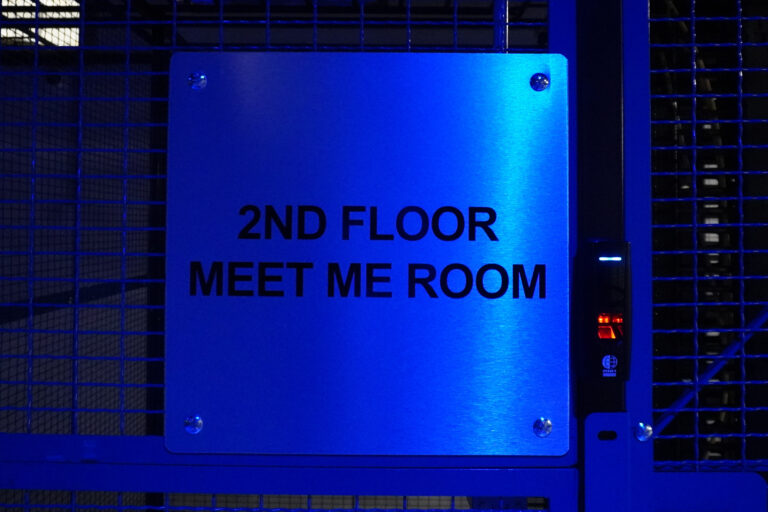
“And then trying to see first-hand the design of the building, how we segment subsea and terrestrial, what a carrier-neutral meeting room looks like, and talk in more depth about their projects,” Santaliz continues.

Due to the impending Covid lockdowns the party had to leave early, meaning Santaliz didn’t get to meet them in person; however, the knowledge share continued over the ensuing months and the Asia-South America Digital Gateway Project is
moving at pace.

“We haven’t travelled since, nor have they, but we had the communication with the ministry from Chile and they are moving forward with their project – Chile is becoming a new gateway for South America,” Santaliz explains.

The digital gateway was announced in 2019 when MTT and the development bank of Latin America, CAF, signed a $3 million technical cooperation agreement to finance feasibility studies, later conducted by Chile’s telecom regulator Subtel. A cable integration, the initial aim was to lay a cable up to 15,000 miles long with at least two fibre pairs and a transmission capacity of 10-20Tbps.

The Transoceanic Cable was confirmed the following year in July, with a route that would link Valparaiso, Chile with New Zealand and Sydney. According to the Chilean government it was the most cost-effective route, although Shanghai
was originally being considered before international concerns were raised.

That aside, Santaliz says: “They are moving on their efforts to have Chile become the gateway towards, in this case Australia and from there on to Asia, basically. So Chile is the first country in Latin America creating this new gateway
across to Sydney.”

The link will also play a part of the success of the Digital Economy Partnership Agreement, the “first of its kind” agreement that came into force in December, for digital trade and data flows between Singapore, Chile and New
Zealand.

During 2020 a series of further announcements emerged from the country. On the data centre front, EdgeConneX opened the first of two facilities in Santiago and Huawei announced its second hub in the country would open in the same city by the end of the year.

Google’s 10,500km Curie cable landed in the coastal city of Valparaiso and phase two of the Caribbean Express cable was announced, connecting Panama to Chile, then linking into Ecuador and Peru.

OECD analysis published this year concluded that Chile saw the most rapid adoption of mobile broadband in the OECD between 2010 and 2018, with a 10-fold increase in subscriptions. At 87.5%, household connectivity is on a par
with OECD averages and business broadband connectivity is also high, at 89.6%, according to the first Chilean ICT survey conducted in 2019.

However, fixed broadband penetration remains a challenge and, despite having one of the highest rates of annual growth of fibre subscriptions across OECD countries, it stood at 66.5% between 2018 and 2019. Further, fibre connections
account for 25% of total broadband connections and 50% of these connections concentrated in the Región Metropolitana, according to Subtel data.

Independent Latam

The knowledge exchange with NJFX has covered a number of topics, but many come back to tackling these, and similar, challenges.

“We have shared the concept of being open, the benefits of having a landing station used for multiple cables not just one at a time,” Santaliz explains.

“We gave our advice to them and they are reviewing it and we have conversations on their architecture. Depending on the final grouping they have, the members of this new cable, we might even be able to develop their landing station for them. So that’s an opportunity that we would consider, depending on who the anchor consortium members would be for that,” he adds.

Developing a CLS takes up to two years, by which time Chile’s requirements will have progressed significantly, but the country – and wider region – are well ahead in preparing for future needs.

“There’s an incredible amount of investment already happening in South America,” says Santaliz, citing the Monet, BRUSA and Seabras-1 cables.

“They are going to start going through the end-of-life cycle with the existing cables that are there and one of the challenges is to make sure that the new cables – even though they have so much greater capacity than the old cables – you’re going to still need more of them,” he adds, before revealing that, “we should expect two more cables announced within the next two years.”

However, this next generation of cables – such as Ellalink, connecting Latam to the US, and the South Atlantic Cable System linking Angola with Brazil – will not depend on the US. It’s a trend Santaliz says is bringing independence to the region, but it needs to extend beyond the shoreline – and that’s a subject Santaliz is so passionate about, he features on this year’s day three Capacity Latam panel, Delivering diverse connectivity to Latin America.

“The last challenge is you have the arteries built but do you have the capillarity in place? Is there going to be a competitive landscape for capillarity in Latam? Because inexpensive international capacity doesn’t give you very much if you don’t have competitive local access. The ministry is very aware that it is not about landing a cable – how do we get that cable’s connectivity across the country?

“So that’s the next challenge you’re going to have to develop – getting that infrastructure built,” Santaliz adds. While he’s a fan of the public-private model championed by the US for its rural connectivity needs, he sees another trend
unfolding in the industry.

“What you are seeing is partnerships that we have not seen before.”

Giving an example, he explains: “The MVNOs [mobile virtual network operators]… In the US, if you have Verizon making the investment, they are going to allow Comcast, they are going to allow Altice, AT&T to piggyback on the deployment of their 5G. So you are going to see multiple partners that are non-traditional, starting to work together, to make the economics of 5G work in the US.” In short, it’s all about “understanding what the private sector’s costs are in deploying private infrastructure”.

While these partnerships are all about managing the cost, other market shifts are starting to make waves too.

“The private sector adapts to the environment it has and we are part of that private sector and we are adapting to higher availability, better security and better network architecture,” Santaliz says.

For Santaliz, one major adaptation that connectivity will allow – in all regions – is the creation of more over-the-top operators (OTTs). Not just peddling content but providing essential services such as banking and healthcare.

“Facebook was an idea, today it is running global network architecture,” he says. “The banking industry needs to make sure their stuff always works also – they have a philosophy of never being down, never missing a transaction. How can you let a social media company have a better up time than a bank? Who are you going to trust in the future, your Facebook account or your banking account?

“You are going to see a new wave of OTTs who cannot afford not to have the best-in-class assets. They are going to know how the architecture works and they are going to redistribute how their connectivity gets applied.”

Whether more industries taking matters into their own hands is a sign of progress or failure on the part of the incumbent connectors is a point of debate – however, whether banking, healthcare, or both, Santaliz could be onto something.

“This connectivity revolution that we are a part of is changing social dynamics and it is going to allow us to rethink traditional industries in a way that will provide a lot more efficiency.”

###

About NJFX:

NJFX is a Tier 3 Carrier Neutral Cable Landing Station campus. Our colocation ecosystem has expanded to over 35 network operators offering flexibility, reliability, and security. Our Wall, NJ location provides direct access to multiple subsea cable systems giving our carriers diverse connectivity solutions and offers direct interconnection without recurring cross-connect fees.

Chile’s Digital Transformation Read More »

NJFX CEO, Gil Santaliz to Join Keynote at Capacity LATAM 2021

NJFX CEO, Gil Santaliz to Join Keynote at Capacity LATAM 2021

Helping to Define Latin America’s Connectivity Strategy for the Year Ahead

Gil Santaliz

CEO

April 5, 2021

Industry leaders are coming together to drive the future of connectivity for Latin America at this year’s Capacity LATAM Conference. This must-attend event for regional and global telecom leaders will showcase how telecom carriers are transforming their businesses to meet digital connectivity needs.

The event will be held virtually April 27 – 29, 2021, providing ample opportunity to engage in the action packed agenda. Gil Santaliz, NJFX CEO will join other thought-leaders for the Subsea Keynote panel on April 29 at 10:30 BRT entitled: Delivering Diverse Connectivity to Latin America

Subsea Keynote Panelists include:

  • Fabian Campo, Senior Managing Director, Delta Partners
  • Philippe Dumont, CEO, EllaLink
  • Gil Santaliz, CEO, NJFX
  • Andy Bax, COO, Seaborn
  • Pablo Fraguas, Sales VP, Southern Region, Telxius

Panel Topic:

Latin America is home to several exciting new and upcoming subsea projects. This session explores how new cables are lowering latency, increasing resilience, ensuring better connectivity for all, and challenging the dominance of North-South connectivity.

Santaliz will draw on his 25 years of experience and many telecom partnerships to provide valuable insights on the state of the telecom market, changing dynamics of global subsea cable deployments and other market trends.

As CEO of NJFX, Santaliz helps carriers strategically diversify connectivity options to key hubs across North America, Europe, and South America, bypassing legacy chokepoints.

Santaliz founded NJFX based on a critical need he saw in the marketplace for route diversity and help carriers solve for single points of failure and the potential of bottlenecks found in congested areas such as NYC Metro. Hence, ‘Tier 3 by the Subsea’ was born. This first-ever model in the U.S. intersects a carrier-neutral subsea Cable Landing Station meet-me room with an independent Tier 3 colocation facility. Home to four subsea cables, including Havfrue/AEC2, Seabras, TGN1 and TGN2, NJFX is the ecosystem of choice for carriers, subsea cable providers, OTTs, enterprises and financials.

Register for the event HERE.

###

About NJFX:

NJFX is a Tier 3 Carrier Neutral Cable Landing Station campus. Our colocation ecosystem has expanded to over 35 network operators offering flexibility, reliability, and security. Our Wall, NJ location provides direct access to multiple subsea cable systems giving our carriers diverse connectivity solutions and offers direct interconnection without recurring cross-connect fees.
More In the News

NJFX CEO, Gil Santaliz to Join Keynote at Capacity LATAM 2021 Read More »

small_c_popup.png

Let's have a chat

Learn how we helped 100 top brands gain success.