Hello and welcome back to Luminaries in Telecom!
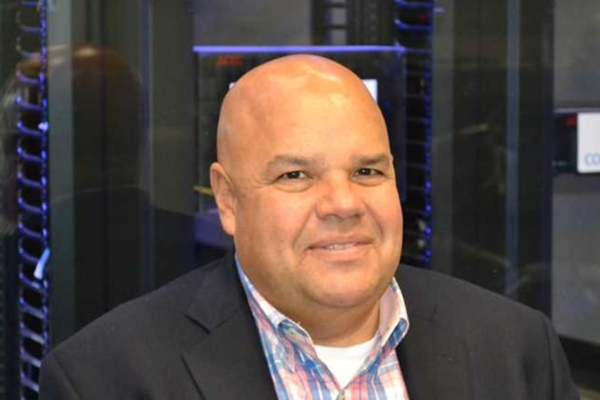
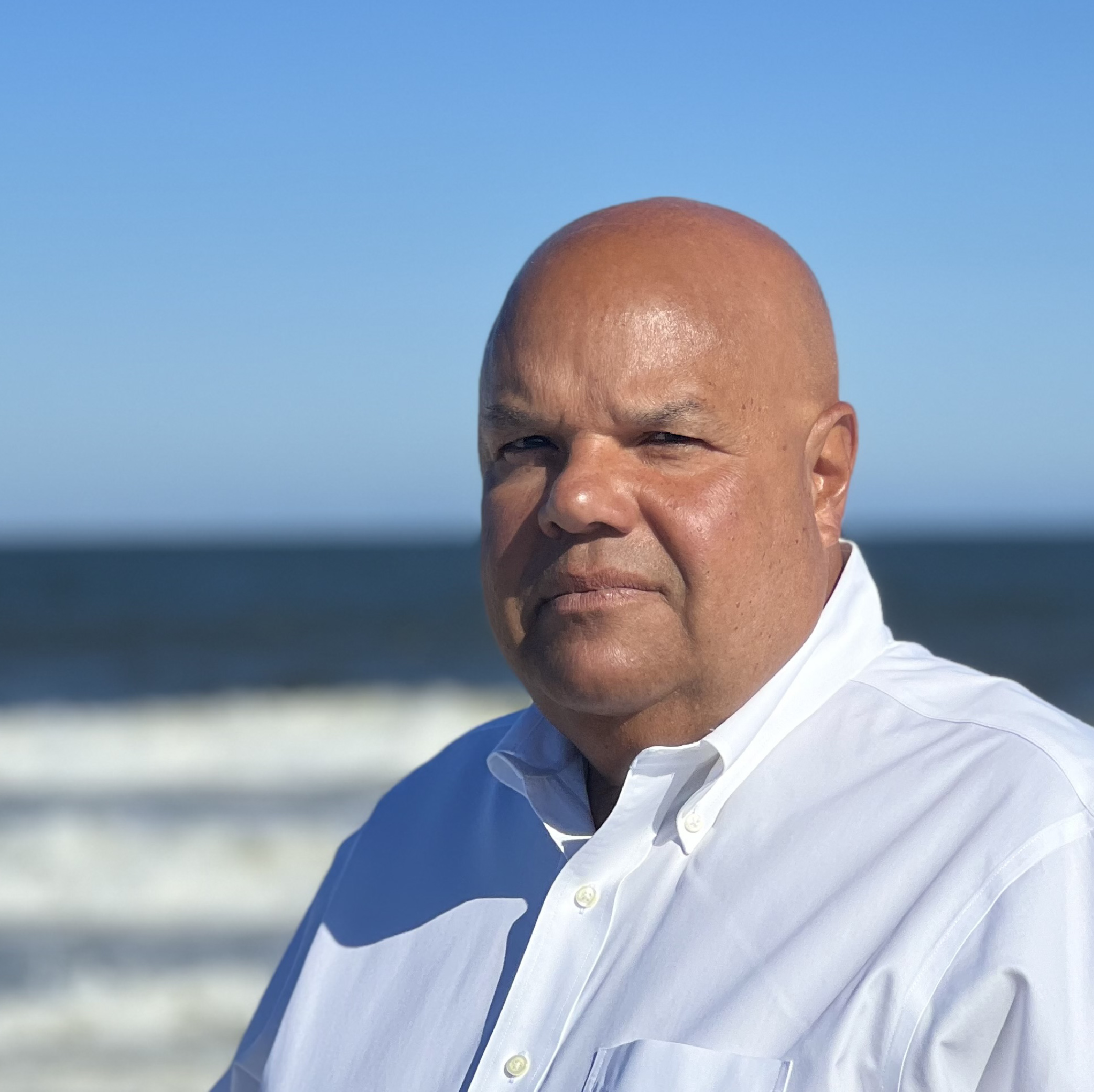
Our May Luminary edition highlights an especially prescient leader in our industry. He has quickly built an outstanding reputation since he introduced himself to telecommunications in 2017. We are eager to share all we learned about his journey and what led him to the man we are titling, “The Architect of Sustainability” aka Mr. Peder Nærbø! He has brought awareness to our industry with his vast knowledge and passion for creating a greener world within telecoms.
Hailing from the principal port city of Oslo, Norway, young Peder’s professional career blossomed quickly creating many stepping stones that ultimately brought him to our industry. Peder admitted he was never fond of traditional education and only completed one year of college in London focusing on shipping (ocean transport). With eyes to the sea, he found a shipping job as a shipbroker that did not require a college degree. A perfect fit for young Peder, as this experience would become valuable and practical in growing his people skills. Over 8 years, he moved up the chain of command while becoming fascinated with collaborating alongside international clientele as he oversaw transporting steel products around the world. With his experience in more complex steel parcel shipping, he found it less appealing when the company changed strategy and offered in his words, “a very boring job shipping full vessels of cargo in bulk like coal, grain, fertilizer, etc.” With the unappealing job offer, Peder felt it was time to give college another try at the age of twenty-seven. However, his time back did not last very long as he reminisced, “The first day reminded me of what it was like being back at school, the second day was just to make sure day one was as bad as I thought it was.”
Eager to explore new paths, a friend recruited him to Acta Sundal Collier as a financial advisor in 1998. Through his position, he came to appreciate the value of real estate, specifically industrial real estate. As he stated, “Everyone focused on the beautiful buildings downtown where the high-rise buildings were in the Business District.”
“Nobody really wanted the low box sitting in the field with a lot of lorries in front…not very sexy,” Peder said. He thought differently than others and saw the potential to make very long lease contracts with these buildings. He started to pursue real estate and carved out a niche in industrial real estate bringing in long-term investments – not the glamorous high-rises others focused on.
A turning point came in 2005 when Peder recalls hearing the reports of his idyllic home city of Oslo “sitting inside of a fjord surrounded by snowcapped mountains” had the worst air quality of any of the capitals in Europe during wintertime. Traffic, like any metropolitan area, was an obvious issue but the true leading cause was the logistics with train and ship terminals next to the city center. The local government was shocked by this discovery and took decisive action towards sustainability. This included stopping the use of home heating oil, reducing traffic congestion, and establishing incentives for electric vehicles. Peder noted, “Nothing was being done for the logistics, the root issue. However, the logistic operators were already desperate to get out of the city, needing more space and modern facilities.” This was his opportunity to combine his background in shipping and real estate. “I started the company, Bulk Infrastructure, and worked with my investor clients to envision a more sustainable future for Norway. In doing so, I pushed the initiative towards moving logistics out of the city of Oslo.”
In 2010, having success with his first sustainability endeavor, Peder began receiving calls from potential clients regarding sites specifically for building data centers. “At this point, I had no clue what a data center was, I showed them everything I had, they left, and I never heard anything back! This happened three times. I said, wait a minute I have something here that’s interesting, but obviously, I did not have it. They didn’t come back and buy anything from me. They didn’t ask me to build a data center whatever that was, so I started studying the data center industry.”
Peder realized he could facilitate a historic push of data centers into Norway. The country was almost running on 98% renewable energy from hydropower, meaning the environmental impact of running such power-hungry demands could easily be met. Peder saw a chance to dive into the unknown again, combining his industrial real estate background with building and zoning for data centers. He began mapping out possible routes seeing data centers much like the cross-dock terminals and warehouses of his industrial real estate business.
Peder leveraged his skills and his newly found research about data centers to expand Bulk. He cites using his network of established contacts throughout his career, collectively teaming up with colleagues in the national rail and national grid sectors to solve the problem of the incoming emerging fiber networks.
“Norway has all this renewable power, but our early buildout in fiber was now more than 20 years old and had been chopped and changed for generations. We couldn’t provide continuous dark fiber over long distances, but this was about to change,” he said.
He created a ring structure in Norway to interconnect the coastline directly which unlocked some of the biggest surplus of renewable energy to Norway at the very southern tip of the country.
He envisioned building a large campus for data center companies to come together and build whatever they wanted using only renewable energy. The concept became reality, as it is the biggest substation in Europe utilizing sustainable energy, at 800 acres (or almost 3 square kilometers), and it is all interconnected with huge power resources. “We have a hundred megawatts on two feeds to our private substations and we have another 300 megawatts that we can tap into in 2026 when the national grid finishes a new mega substation on our land to interconnect new offshore wind with the current hydropower.”
In 2017 Peder found out that Google and Facebook considered building the first fiber cable from the U.S. to the Nordics in twenty years which later became known as the Havfrue cable. Through his vast network of connections, he found the right people to talk to about this up-and-coming project. Approaching both giants, he politely said, “I’m a real estate guy from Norway and I want to unlock all this renewable energy. I understand you’re going to build from the U.S. to Denmark and Ireland, can I please add Norway to the design of the network and become a partner and co-builder?”
They allowed him to build a Trans-Atlantic cable even though this was in a space that was unfamiliar to Peder. He jumped hard into this new venture. He was able to convince Google, Facebook, and later Aquacomms in coming on board to work on an agreement that aligned with all four parties – and so “we began.”
It took years of planning with some inevitable setbacks. However, with Google and Facebook being experienced buyers and builders in the subsea market, they made quick work of finding the suppliers necessary while Aquacomms brought the experience in operating these systems.
“I felt very protected within the group of companies we joined with, and the cable was then laid being the first cable to interconnect Norway with the U.S. and Ireland. This was a big achievement for me and my company,” he said smiling.
Peder reminisced on how impressed he was with the giant cable ship “Responder” from Subcom as it docked in Kristiansand where he got to go on board and look at all the facilities. “They had three tanks that each held 2800 kilometers of cable, enough to cross the Atlantic. I remember being so impressed by the sheer power of the vessel for maneuvering rough seas while laying cable on thousands of meters depth with delicate tension control.”
Peder goes on and explains how the vessel uses a plow of 34 tons to bury the cable under the seabed, protecting it from fishing gear and anchoring in the North Sea as it crossed more than 70 other cables and pipelines like “threading a needle.”
He had the opportunity to pull the cable ashore with his brother, Erik, who worked on the data center campus. Peder thought, in the moment while the cable was in his hand, “My mother always said, do something you want to do, follow your passion and that is what we have always done. Two guys with no high education pulling Norway’s first trans-Atlantic cable ashore was quite a moment for me.”
Later, Peder was key in terminating two other cable systems in the Nordic region, which also terminate into the Southern Norwegian landing in Kristiansand. Now there are several brand-new systems coming into southern Norway. Bulk started it all by building the backbone so that future cables could continue to land on the coastline and travel onwards to Oslo and Stockholm.
Inspired by Norway being a leading country in sustainable solutions, Peder explores to see where else we can tap to create a greener world. He explains that Canada has renewable power at a large scale with some of the biggest hydro plants in the world in Northern Canada, Quebec, and Labrador especially. “They also have a huge amount of hydropower that is untapped. Once you move power, you lose the efficiency of the power as you transport at a very long distance – a grid loss,” Peder said.
Peder said, “My ultimate plan is to interconnect large renewable resources in the Nordics and Atlantic Canada with fiber and data center facilities to play a vital role in clean renewable energy for data processing.” He advises everyone to ask, “How green is our data? Are you asking IT services what the CO2 footprint on your compute is? There are many renewable energy-fed data centers around the world, but they aren’t even a green dot on the map because they are hidden under layers of different products. If you ask these questions, this will help bring a rise to those data centers that are contributing to a greener initiative.”
As we close the interview, Peder talks about his move to the United States to be closer to the “Leif Erikson” cable project. His next trans-Atlantic fiber cable from Norway to Canada, the first with only renewable energy as a source. He also explains that over the last couple of years, the U.S. government and large shareholders are starting to put more weight behind sustainability and ESG goals. He added, “This is the green shift I have been waiting for and I see a great opportunity for my company to play a role.”
___________
Thank you again, Mr. Peder Nærbø for taking time out of your schedule to share a bit of your ongoing journey with us and the greater telecoms community! And of course, there is more to the story of “The Architect of Sustainability”, Peder Nærbø, that we couldn’t cover that we may revisit in the future. This concludes this month’s feature of Luminaries in Telecom. Please feel free to add to the conversation! Did you meet Peder Nærbø at the recent ITW? What did you take away from his sustainable business model/projects that benefit his company while also helping to improve the environment? Sound off in the comments below with any fun facts/specifics that may have been missed. For any suggestions about any movers and shakers in telecom history you think deserve a feature, send a message to [email protected]. Thanks for reading, until next month.