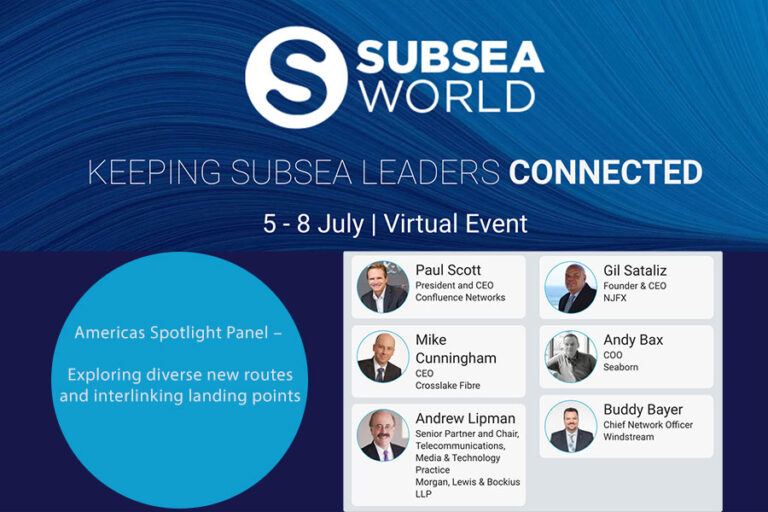
Capacity Europe 2020
Capacity Europe 2020 Read More »
Europe’s largest event uniting the global connectivity industry will take place on the 19-22 October.
Capacity Europe 2020 Read More »
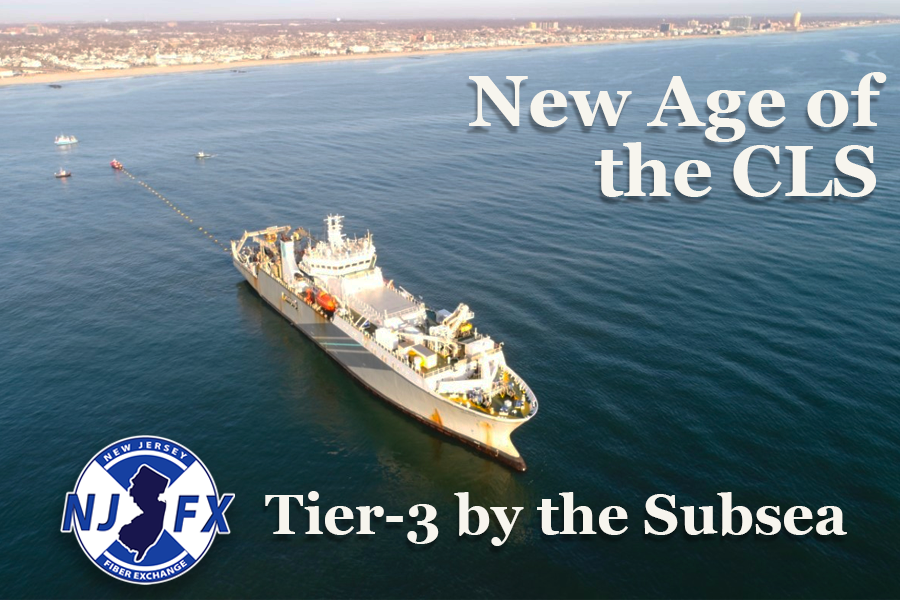
As a Carrier-Neutral Ecosystem, NJFX Brings Together a Variety of Carriers and Service Providers That Enable So Much More For End-Users
CEO
July 7, 2020
Wall Township, NJ – A Cable Landing Station (CLS) colocation campus in the U.S., offering Tier 3, carrier-neutral data center capabilities — providing direct access to multiple independent subsea cable systems connecting North and South America, Europe and the Caribbean — is an entirely unique facility in the world of information and communications technology (ICT) with singular attributes and capabilities. Especially as content and application requirements continue to push the need for data to be closer to the edge, such a CLS colocation campus is essential in providing strong interconnections between customers, partners and transcontinental subsea cable systems.
“For global enterprises, ISPs, CDNs and network operators, having access to diverse terrestrial and subsea options for connectivity is the foundation of their ability to reach new customers and penetrate new and emerging markets,” commented Gil Santaliz, CEO for NJFX. “Moreover, by establishing a presence at the NJFX CLS colocation campus, customers can leverage direct over 12 terrestrial routes to major North American destinations and avoid unnecessary legacy network bottlenecks. In addition, NJFX customers can also gain access to four subsea cable systems between continents for the best intercontinental data exchange, including critical transatlantic connectivity to Europe & South America.”
“By establishing a presence at the NJFX CLS colocation campus, customers are now able to leverage direct, low latency routes to major U.S. business hubs in New York and Ashburn that avoid legacy chokepoints,” stated Ivo Ivanov, CEO of DE-CIX International. “We are also seeing the LATAM market as one of the focus regions for networks we want to connect from NJFX to DE-CIX New York.”
Why are these connectivity and interconnection capabilities now more important than ever?
If the recent months have taught us anything, it’s that a surge in digital services usage places tremendous pressure on the internet to be able to handle the rise in traffic volumes and shifting patterns of demand that can potentially affect the end-user experience. To give but one example of how this has affected communications providers, in March, as internet users began staying home to work, study and self-entertain, one major carrier saw a 20 percent increase in web traffic in a single week. Virtual Private Network (VPN) usage went up 49 percent, while video rose by 36 percent, and online gaming increased 115 percent.
CenturyLink, which offers an extensive global fiber network, including approximately 450,000 route miles of fiber and a network serving customers around the world, recently established a point-of-presence (PoP) at NJFX. The carrier provides an underground terrestrial fiber network, linking key routes across North America. This is just one more example of the advantages of a CLS colocation campus with carrier-neutral data center capabilities that brings together a variety of communications and service providers that enable so much more for end-users
“Establishing a point of presence at NJFX allows CenturyLink customers close proximity to data, decreasing network latency, along with delivering smart options to further diversify and plan their international connections with clarity and accuracy,” commented Warren Greenberg, vice president and general manager for CenturyLink in NYC, NJ and CT. “We look forward to offering our services suite at the NJFX campus and to our enterprise customers.”
Rather than a gradual evolution, COVID-19 has accelerated the digital transformation efforts of many enterprises virtually overnight. Moreover, with IDC predicting that global data traffic will increase 61 percent by 2025 to reach 175 zettabytes, up from 33 ZB last year, we can reasonably anticipate that the demand for networking, compute, and storage capacity will remain high, especially as more and more next-generation technologies such as AI, IoT, and AR/VR applications become mainstreamed, and 5G sees wider adoption.
Faced with these current and future challenges, a CLS colocation campus that serves as a network interconnection point at the easternmost edge of North America enables companies to design and construct the most efficient network for their business and ensure the delivery of high-bandwidth content and applications to serve end-customers. NJFX offers an ecosystem rich with fiber networks and platforms providing multiple options for route diversity, availability, reliability and security.
Because of its location on the edge of domestic and international networks and subsea cables, this enables enterprises, financial services organizations and carriers to utilize direct routing, eliminate single points of failure and avoid typical network congestion points.
Recently, Epsilon connected its network backbone to NJFX’s facility, extending its software-defined networking (SDN) platform, Infiny, to offer the ability to bypass New York entirely. Epsilon customers can connect directly to Europe from NJFX via the Transatlantic Bridge, including the TGN cable as well as the Havfrue (AEC2) cable when it becomes ready for service.
“NJFX is a pivotal data centre for transatlantic traffic,” said former Epsilon CEO Jerzy Szlosarek. “With multiple transatlantic cables coming directly into the NJFX facility, connectivity can happen right at the edge, without legacy bottlenecks, and can then continue across North America via the complete Epsilon network.”
Via Epsilon, as well as several other network providers such as Altice, NJEdge, TATA Communications, Windstream and Zayo, companies can readily access major cloud service providers (CSPs) to launch public and private cloud deployments from NJFX, including Alibaba Cloud, Amazon Web Services (AWS), Azure, Google Cloud Platform, IBM Cloud, and Oracle.
The Flexera 2020 State of the Cloud Report recently revealed that the most common multi-cloud approach among enterprises is a mix of multiple public and private clouds. NJFX’s ability to offer streamlined access to CSPs is especially significant in view of the fact that cloud-first policies and cloud migration are top-of-mind among enterprises, which are rapidly increasing cloud spend and workload volumes, according to the report.
You can check out the other articles in the Why CLS Matter series in the links below:
https://njfx.net/blog/why-the-cable-landing-station-matters/
###
About NJFX:
NJFX is a Tier 3 Carrier Neutral Cable Landing Station campus. Our colocation ecosystem has expanded to over 35 network operators offering flexibility, reliability, and security. Our Wall, NJ location provides direct access to multiple subsea cable systems giving our carriers diverse connectivity solutions and offers direct interconnection without recurring cross-connect fees.
Windstream Extends 100G Network from Ashburn, VA to NJFX January 22, 2016 Leading data center and colocation solutions provider New Jersey Fiber Exchange (NJFX) and
Garden State’s Newest Data Center Gets Direct Fiber Tap to Brazil and Beyond January 22, 2016 New Jersey Fiber Exchange (NJFX) this week announced it
Windstream Expands Its 100G Network to NJFX’s Meet-Me Room at Tata Communications’ Cable Landing Station January 18, 2016 New 230-Mile Extension Connects
Windstream Visits NJFX, Tata at the Jersey Shore January 16, 2016 Windstream has extended its 100G buildout to the Jersey Shore. The 230+ mile network expansion
U.S. sensors detect Russian submarines near underwater cables November 22, 2016 Washington (CNN) – When a Russian military ship called the Yantar suddenly crossed the Atlantic
The Cyberthreat Under the Street November 12, 2015 (NY Times) – WITHIN the last year there have been 16 so-called fiber cuts in the San Francisco
Why the Cable Landing Station Matters Read More »
An interview with Michael Cunningham, CEO of Crosslake Fibre
Originally posted 23 June 2020 on SubCableWorld.com.
June 29, 2020
WALL TOWNSHIP, NJ –
Editor’s note: In recent years, submarine fiber optic cables have been appearing everywhere. The industry is familiar with the large-scale OTT-sponsored cables being built around the world, but others are taking advantage of the advancement in submarine cable technology to put cables along routes that were never considered before.
One system that definitely falls into the latter category is a submarine cable system that entered service last year in Lake Ontario. Built by Crosslake Fibre, the cable is, as far as SubCableWorld can determine, the longest fiber optic cable ever installed in a body of fresh water.
SCW recently had the pleasure to speak with Michael Cunningham, CEO of Crosslake Fibre, about the Lake Ontario project and the company’s plans for future systems.
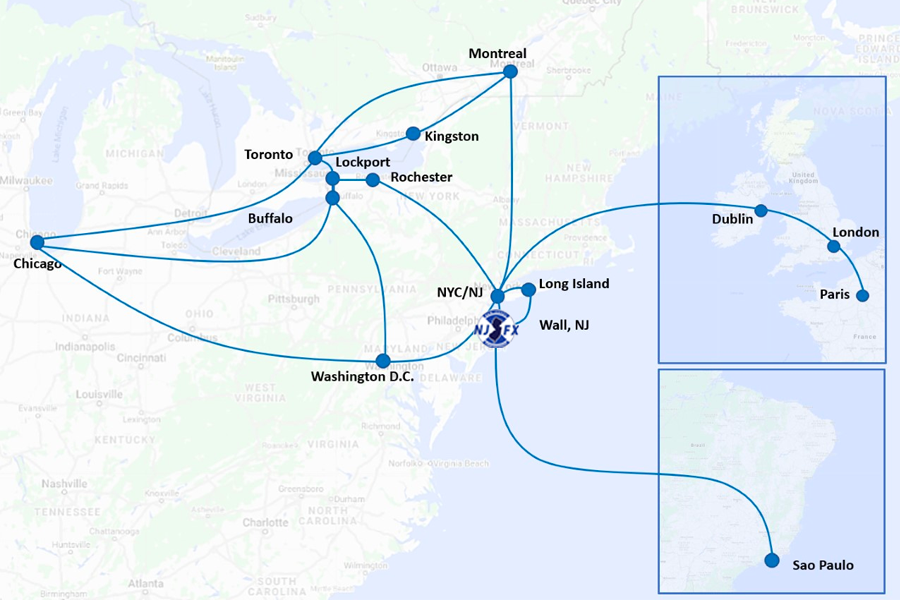
Mr. Cunningham: Crosslake Fibre is a submarine fiber optic cable system developer based in Toronto, Canada. We’ve built a cable across Lake Ontario connecting Canada and the United States and we’re developing three other submarine cable systems.
The Lake Ontario cable entered service in October. This is a 58-kilometer cable installed across the lake that forms part of a route between Buffalo and Toronto. Now that the route is in service, we are looking to extend our network. Early this year, we announced that we were have extended our backhaul capacity into Equinix’s TR2 International Business Exchange™ (IBX®) in Toronto and its NY4 IBX in Secaucus, New Jersey. Our network also extends to the NJFX submarine cable landing station/data center complex in Wall, New Jersey, where we can connect to some of the international submarine cables landing there, such as the transatlantic cables and Seaborn’s Seabras-1 to South America.
Due to the relatively short distance across Lake Ontario, we were able to use non-repeatered cable with a high fiber count. The submarine cable we used supplied by Hexatronic and has 192 fiber strands. This gives us a design capacity in the thousands of terabits per second.
As the non-repeatered cable isn’t powered in the way that repeatered cables are, we didn’t need the traditional large cable landing station. We were able to bring the submarine cable right into the network on either side of the lake.
Every submarine cable project is unique and presents a different set of challenges and the Lake Ontario build is no different. In terms of a location and geography to install a cable, it’s definitely one where there is a comparatively benign environment, especially compared to the ocean conditions where most submarine fiber optic cables are laid. In Lake Ontario, you have a lakebed that is relatively soft and easy to install a cable into. You don’t have a lot of challenging geologic features. It’s not the busiest place in the world and there’s not a lot of current. The weather is not as extreme as you see in the ocean. So it was a very good kind of place to install a cable.
Our next project will connect the United Kingdom and France across the English Channel. There hasn’t been a new and dedicated fiber optic cable built across the English Channel in almost 20 years. We’re looking to be the next generation of cables along that route.
We’re in the process of developing the cable project and to kick off the material work in the next month. It’s a very similar design to the Lake Ontario cable. It’s non-repeatered and has the same fiber count — 192.
The cable, however, will have to deal with much greater risk factors in the English Channel than in Lake Ontario. It will have to deal with fisheries and avoid anchorage zones. There is also the issue of unexploded ordnance (UXO). That required a lot more study and a lot more planning. We’ve done a UXO study and the survey will kick off in July.
We decided to go with 192 fibers in both the Lake Ontario and the UK-France cables. We could have gone higher, but what we have to keep in mind is the repair, especially in the English Channel with the many threats that face cable there. We have to assume that over the life of the system, repair will be a requirement. We have to insure that we’ll be able to get the sea repair done quickly and that means that we can’t have too high a count – it just takes too long. There are cables out there with fiber counts in the thousands of pairs and the repair plan for those is to just replace the cable. That can be done on some very short links of only a few kilometers, but for the scale we need, that isn’t practical.
We also are working to develop two other cable systems. One is the Wall-LI cable between the NJFX complex in Wall, New Jersey, and Long Island, where other transatlantic cables come in and there is a lot of infrastructure for international traffic. Wall-LI will allow that traffic to bypass New York City.
The other project we’re looking at is back in Lake Ontario. It’s called Maple Leaf Fibre and will have a submarine component running between Toronto and Kingston, followed by a terrestrial component to Montreal. The submarine cable in this case will run more or less east-west in Lake Ontario, rather than north-south as was the case with the original Buffalo-Toronto cable.
###
About NJFX:
NJFX is a Tier 3 Carrier Neutral Cable Landing Station campus. Our colocation ecosystem has expanded to over 35 network operators offering flexibility, reliability, and security. Our Wall, NJ location provides direct access to multiple subsea cable systems giving our carriers diverse connectivity solutions and offers direct interconnection without recurring cross-connect fees.
Windstream Extends 100G Network from Ashburn, VA to NJFX January 22, 2016 Leading data center and colocation solutions provider New Jersey Fiber Exchange (NJFX) and
Garden State’s Newest Data Center Gets Direct Fiber Tap to Brazil and Beyond January 22, 2016 New Jersey Fiber Exchange (NJFX) this week announced it
Windstream Expands Its 100G Network to NJFX’s Meet-Me Room at Tata Communications’ Cable Landing Station January 18, 2016 New 230-Mile Extension Connects
Windstream Visits NJFX, Tata at the Jersey Shore January 16, 2016 Windstream has extended its 100G buildout to the Jersey Shore. The 230+ mile network expansion
U.S. sensors detect Russian submarines near underwater cables November 22, 2016 Washington (CNN) – When a Russian military ship called the Yantar suddenly crossed the Atlantic
The Cyberthreat Under the Street November 12, 2015 (NY Times) – WITHIN the last year there have been 16 so-called fiber cuts in the San Francisco
“Every Submarine Cable Project Is Unique” Read More »

International Telecoms Week is a widely attended and eagerly anticipated annual event. As with many events this spring, ITW 2020 transitioned from in-person to fully virtual. It’s quickly becoming the new normal.
June 24, 2020
WALL TOWNSHIP, NJ – Despite the new format, the goals of the event remain the same since the first conference in 2000. ITW aims to bring the carrier, data center, software, hardware, internet application, and investment communities together.
NJFX was pleased to announce CenturyLink Inc. (NYSE: CTL) is the latest communications service provider to establish a presence at the CLS campus. CenturyLink offers an extensive global fiber network including approximately 450,000 route miles of fiber and a network serving customers around the world, providing secure and reliable services to meet the growing digital demands of businesses. CenturyLink’s expansion into NJFX offers its customers more options to connect and leverage cutting-edge services.
During ITW, NJFX team members participated in a JSA virtual roundtable bringing the telecommunications infrastructure community up to date on all the latest happenings at NJFX. Highlights include NJFX’s effort to bring millennials and digital natives into the infrastructure side of telecommunications.
NJFX Founder and CEO Gil Santaliz participated in a virtual session entitled “Community: Subsea” along with Andy Bax, COO of Seaborn Networks; Ian Clarke, VP Global Submarine Sales at Ciena; and Laureen Cook, executive TMT adviser at Extelcon. The focus was on the latest transatlantic cable projects, which are entering a renewal phase. This new phase is being powered by new business models, including investment by OTTs, along with technological advances that could open up new routes.
Santaliz added that content, streaming and broadcasting players leading the charge for new levels of connectivity are helping to enable the current (virtual) state of affairs stating, “If I’m not there, I want to feel like I’m there, and broadcasting lets me do that. You need that connectivity to make that work.”
###
About NJFX:
NJFX is a Tier 3 Carrier Neutral Cable Landing Station campus. Our colocation ecosystem has expanded to over 35 network operators offering flexibility, reliability, and security. Our Wall, NJ location provides direct access to multiple subsea cable systems giving our carriers diverse connectivity solutions and offers direct interconnection without recurring cross-connect fees.
Windstream Extends 100G Network from Ashburn, VA to NJFX January 22, 2016 Leading data center and colocation solutions provider New Jersey Fiber Exchange (NJFX) and
Garden State’s Newest Data Center Gets Direct Fiber Tap to Brazil and Beyond January 22, 2016 New Jersey Fiber Exchange (NJFX) this week announced it
Windstream Expands Its 100G Network to NJFX’s Meet-Me Room at Tata Communications’ Cable Landing Station January 18, 2016 New 230-Mile Extension Connects
Windstream Visits NJFX, Tata at the Jersey Shore January 16, 2016 Windstream has extended its 100G buildout to the Jersey Shore. The 230+ mile network expansion
U.S. sensors detect Russian submarines near underwater cables November 22, 2016 Washington (CNN) – When a Russian military ship called the Yantar suddenly crossed the Atlantic
The Cyberthreat Under the Street November 12, 2015 (NY Times) – WITHIN the last year there have been 16 so-called fiber cuts in the San Francisco
It’s a Wrap: ITW 2020 a VIRTUAL Success! Read More »
The connection into NJFX, which offers access to four submarine cable systems and seven independent U.S. fiber-based backhaul providers, offers the CenturyLink’s customers more connectivity and service options.
Article published by Stephen Hardy, Lightwave, on June 16, 2020
June 17, 2020
Wall Township, NJ –
NJFX, which operates a cable landing station (CLS) colocation campus in Wall, NJ, says that CenturyLink Inc. (NYSE: CTL) is the latest communications service provider to establish a presence at the site. The connection to CenturyLink’s underground terrestrial fiber network provides access to the service provider’s routes across North America.
CenturyLink’s global fiber network runs approximately 450,000 route miles. The connection into NJFX, which offers access to four submarine cable systems and seven independent U.S. fiber-based backhaul providers, offers the CenturyLink’s customers more connectivity and service options.
“Establishing a point of presence at NJFX allows CenturyLink customers close proximity to data, decreasing network latency, along with delivering smart options to further diversify and plan their international connections with clarity and accuracy,” commented Warren Greenberg, vice president and general manager for CenturyLink in New York City, New Jersey, and Connecticut. “We look forward to offering our services suite at the NJFX campus and to our enterprise customers.”
Open for business in September 2016 (see “New Jersey Fiber Exchange set to open Tier 3 by the Subsea colocation facility”), NJFX offers a 64,800-sq-ft Tier 3 CLS colocation facility on a 58-acre campus in Wall. The facility enables direct access to the TGN1, TGN2, and Seabras submarine cables. The building will serve as the cable landing for the HAVFRUE/AEC2 system when it comes online later this year as well as the Wall-LI submarine network in the future. The submarine cables offer connectivity options to Europe and South America.
“Cable landing station colocation is where networks live today and at NJFX, there are petabytes of data per second being transported across the Atlantic Ocean from Europe and South America,” said Gil Santaliz, CEO for NJFX. “We welcome CenturyLink, which has arguably one of the most interconnected and deeply peered networks in the U.S. today, to our growing ecosystem of terrestrial carriers that provide diverse, private routes to transport all of that data from our CLS campus across North America and beyond.”
###
About NJFX:
NJFX is a Tier 3 Carrier Neutral Cable Landing Station campus. Our colocation ecosystem has expanded to over 35 network operators offering flexibility, reliability, and security. Our Wall, NJ location provides direct access to multiple subsea cable systems giving our carriers diverse connectivity solutions and offers direct interconnection without recurring cross-connect fees.
Windstream Extends 100G Network from Ashburn, VA to NJFX January 22, 2016 Leading data center and colocation solutions provider New Jersey Fiber Exchange (NJFX) and
Garden State’s Newest Data Center Gets Direct Fiber Tap to Brazil and Beyond January 22, 2016 New Jersey Fiber Exchange (NJFX) this week announced it
Windstream Expands Its 100G Network to NJFX’s Meet-Me Room at Tata Communications’ Cable Landing Station January 18, 2016 New 230-Mile Extension Connects
Windstream Visits NJFX, Tata at the Jersey Shore January 16, 2016 Windstream has extended its 100G buildout to the Jersey Shore. The 230+ mile network expansion
U.S. sensors detect Russian submarines near underwater cables November 22, 2016 Washington (CNN) – When a Russian military ship called the Yantar suddenly crossed the Atlantic
The Cyberthreat Under the Street November 12, 2015 (NY Times) – WITHIN the last year there have been 16 so-called fiber cuts in the San Francisco
CenturyLink arrives at NJFX cable landing station colocation campus Read More »
June 15, 2020
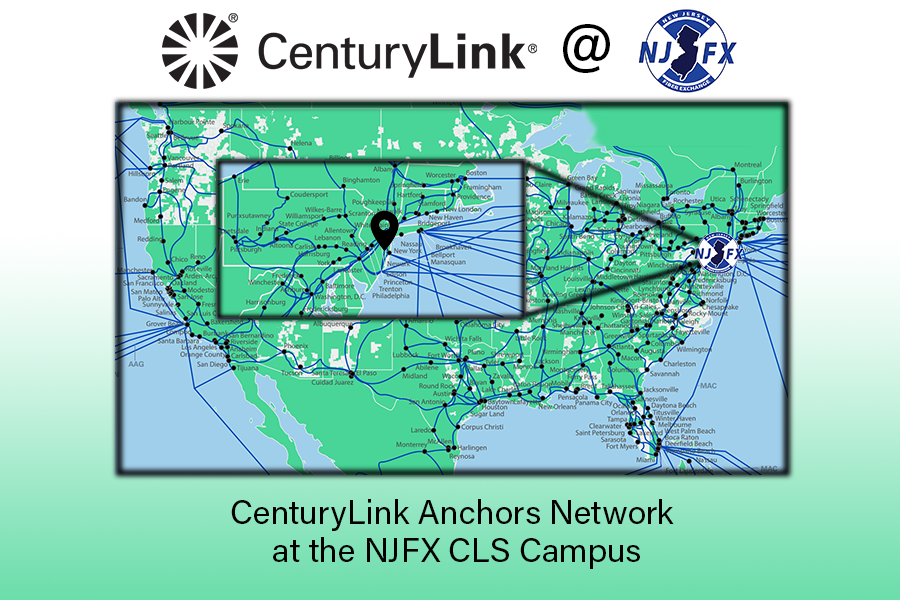
Wall Township, NJ – NJFX, the only Cable Landing Station (CLS) co-location campus in the U.S. offering Tier 3, carrier-neutral data center capabilities, announces today that CenturyLink Inc. (NYSE: CTL), a technology leader delivering hybrid networking, cloud connectivity, and security solutions, has anchored at NJFX with an underground terrestrial fiber network, linking key routes across North America.
CenturyLink offers an extensive global fiber network including approximately 450,000 route miles of fiber and a network serving customers around the world, providing secure and reliable services to meet the growing digital demands of businesses. Focused on customer success, CenturyLink’s expansion into NJFX offers its customers more options to connect and leverage cutting-edge services.
NJFX, home to four subsea cable systems and seven independent U.S. fiber-based backhaul providers, serves as a strategic distribution center for data demarcation into and throughout North America. Its community of carriers make the NJFX CLS a marketplace rich with fiber networks and platforms providing multiple options for routes, security and diversity.
“Cable Landing Station colocation is where networks live today and at NJFX, there are petabytes of data per second being transported across the Atlantic Ocean from Europe and South America,” comments Gil Santaliz, CEO for NJFX. “We welcome CenturyLink, which has arguably one of the most interconnected and deeply peered networks in the U.S. today to our growing ecosystem of terrestrial carriers that provide diverse, private routes to transport all of that data from our CLS campus across North America and beyond.”
“Establishing a point of presence at NJFX allows CenturyLink customers close proximity to data, decreasing network latency, along with delivering smart options to further diversify and plan their international connections with clarity and accuracy,” comments Warren Greenberg, vice president and general manager for CenturyLink in NYC, NJ and CT. “We look forward to offering our services suite at the NJFX campus and to our enterprise customers.”
When a colocation data center campus is physically located at the meeting point of multiple subsea cable landings linking three continents, international connectivity is just a single cross-connect away. The result is a high-resilience, low-latency network with direct interconnection options for service providers, enterprises, carrier-neutral operators and cable companies.
NJFX’s unique CLS model offers more than just the landing point as it helps carriers and subsea providers get data out into the hands of the companies delivering the data, provide faster on-ramps to cloud infrastructure and power communications more reliably.
For more information, please visit www.njfx.net or contact [email protected].
###
About NJFX:
NJFX is a Tier 3 Carrier Neutral Cable Landing Station campus. Our colocation ecosystem has expanded to over 35 network operators offering flexibility, reliability, and security. Our Wall, NJ location provides direct access to multiple subsea cable systems giving our carriers diverse connectivity solutions and offers direct interconnection without recurring cross-connect fees.
For NJFX media inquiries, please contact: [email protected]
About CenturyLink
CenturyLink (NYSE: CTL) is a technology leader delivering hybrid networking, cloud connectivity, and security solutions to customers around the world. Through its extensive global fiber network, CenturyLink provides secure and reliable services to meet the growing digital demands of businesses and consumers. CenturyLink strives to be the trusted connection to the networked world and is focused on delivering technology that enhances the customer experience.
Learn more at http://news.centurylink.com/
For CenturyLink media inquiries, please contact:
Kerry Zimmer
CenturyLink
509-720-4441
[email protected]
Stay informed with the latest press releases, industry news, and more.
CenturyLink Anchors Network at NJFX Cable Landing Station Colocation Campus Read More »

CEO Gil Santaliz will be speaking with fellow panelists from Vertical Systems Group, Newby Ventures, Windstream, Gold Data, and AquaComms. Register here to listen in on the JSA panel titled “Redefining Communication in the Wake of COVID-19.”
JSA Virtual Roundtable – June 18, 2020 – 1pm EST Read More »
June 1, 2020
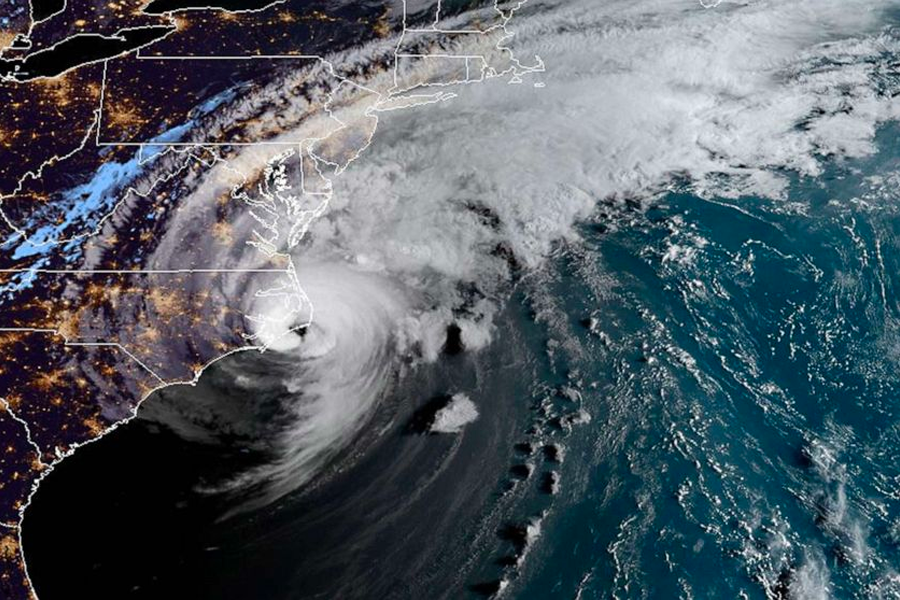
As hurricane season looms, NJFX is ready. Of course, as a Cable Landing Station (CLS) campus, we already have a detailed disaster recovery plan to address various natural disasters, but how about a natural disaster in times of a global pandemic? For most of the world, this situation is completely uncharted territory. But the NJFX team considered this unusual dynamic well before hurricane season started and established a detailed plan with proper COVID-19 safety in mind.
We are living in unprecedented times due to COVID, but NJFX is handling the pandemic with the team’s usual forward-thinking approach. Much of the industry is still operating at limited capacities despite being deemed as ‘essential’, meaning they can get the resources where they are needed, but might be slower to do so with fewer employees. This makes the NJFX team’s proactiveness all the more valuable. We already have established supply chains and processes to ensure what we need is available and can be provided quickly. It is this focus on proactiveness that led our team to develop the following plan that goes into effect 24 to 72 hours before severe weather hits the area:
“At the end of the day, very few companies in our area are considering hurricanes as a major threat,” says Gil Santaliz, NJFX CEO. “But hurricanes do hit the Northeast, and can have a major impact as the state of New Jersey experienced with Hurricane Sandy. But that is what sets us apart; we’re ready and dedicated to ensuring our customers, employees and vendors are prepared and safe.”
COVID-Protected and Ready
Our hurricane preparedness plan and protocols are in addition to the existing COVID-19 measures our team already put in place. We are checking temperatures upon entrance to the building, ensuring that all individuals entering have a mask, and are limiting the number of people present in the building to ensure proper social distancing. NJFX Access and Administrative Manager, Lisa Edelstein is also working to ensure the safety of NJFX employees and customers that need to be in the building, both during COVID and in case of a hurricane-related emergency. She has plans in place to send notices to customers on how NJFX is handling things in the event of a storm to keep our community informed, reassured, and updated throughout the event. She also oversees site access and limits building access as appropriate.
And while all operations-based preparedness measures are critical to avoiding any and all downtime, NJFX also puts an emphasis on giving our employees and customers peace of mind. The current global situation is stressful in and of itself, add a hurricane on top of that and things can get intense. We put our employees top of mind and want to ensure they are protected, safe and following safety protocols.
“Our priority is to make sure our employees and their families are okay above all else,” said Ryan Imkemeier, Cable Landing Station Manager. “If an employee’s family has to evacuate due to a storm, then they’ll want the peace of mind knowing that their family is safe and has a family readiness plan in place.”
This high level of preparedness is what sets NJFX apart. We consider these uncertainties before they become a true threat. Our team has orchestrated a “full-court press” with all team members to ensure that there is no impact in the case of an emergency. And this planning is all the more important during times that are already uncertain and stressful without the presence of severe weather. The NJFX team is prepared and here to help.
About NJFX:
NJFX is a Tier 3 Carrier Neutral Cable Landing Station campus. Our colocation ecosystem has expanded to over 35 network operators offering flexibility, reliability, and security. Our Wall, NJ location provides direct access to multiple subsea cable systems giving our carriers diverse connectivity solutions and offers direct interconnection without recurring cross-connect fees.
Windstream Extends 100G Network from Ashburn, VA to NJFX January 22, 2016 Leading data center and colocation solutions provider New Jersey Fiber Exchange (NJFX) and
Garden State’s Newest Data Center Gets Direct Fiber Tap to Brazil and Beyond January 22, 2016 New Jersey Fiber Exchange (NJFX) this week announced it
Windstream Expands Its 100G Network to NJFX’s Meet-Me Room at Tata Communications’ Cable Landing Station January 18, 2016 New 230-Mile Extension Connects
Windstream Visits NJFX, Tata at the Jersey Shore January 16, 2016 Windstream has extended its 100G buildout to the Jersey Shore. The 230+ mile network expansion
U.S. sensors detect Russian submarines near underwater cables November 22, 2016 Washington (CNN) – When a Russian military ship called the Yantar suddenly crossed the Atlantic
The Cyberthreat Under the Street November 12, 2015 (NY Times) – WITHIN the last year there have been 16 so-called fiber cuts in the San Francisco
Hurricane Preparedness in the Age of COVID-19 Read More »
200 Students Attend Presentation on Internet Infrastructure Careers
May 28, 2020
Wall Township, NJ – As the economy changes course, we see many different trends emerging. Careers that were attractive pre-pandemic may not be as enticing today. Many kids in high school and post secondary schools are shifting their focus to jobs that withstand economic uncertainty. Among them: the connections that have been keeping all of us online. The internet did not break. It is strong and resilient and reliable enough to withstand a major global shift to a remote workforce and student body. The largest factor contributing to this, is the infrastructure in place that keeps us connected: the plumbing of the internet.
It was the topic of a virtual career presentation hosted by NJFX recently. Panelists included new “virtual” intern Amanda Kadunce, a marketing student at Virginia Polytechnic Institute and State University (Virginia Tech). Amanda joined NJFX on May 18th and will assist in a wide variety of projects including sales and marketing initiatives. She is the first intern at NJFX who will be working 100% remotely. NJFX was pleased to accommodate this unique internship for unique times.
NJFX General Manager Felix Seda, recently named to Capacity Media’s “Power 100” list, was also a panelist. “Many companies have canceled their internship programs, but we have found that this new reality can enable more opportunities for young people who do not have to be in close, physical proximity to the workplaces that employ them for a great learning experience,” states Seda. “In addition, being able to bring her experience to younger kids was a great first project for Amanda to dive into.”
“I enjoyed being available to mentor students who are exploring careers, as I am currently. I am only a few steps ahead of them and I hope they were able to relate some of my experiences to their own decision making,” adds Amanda Kadunce, NJFX intern.
Sarah Kurtz, Business Development Manager was also part of the presentation. Each of the panelists provided information about the internet infrastructure industry, including details about NJFX’s CLS colocation campus.
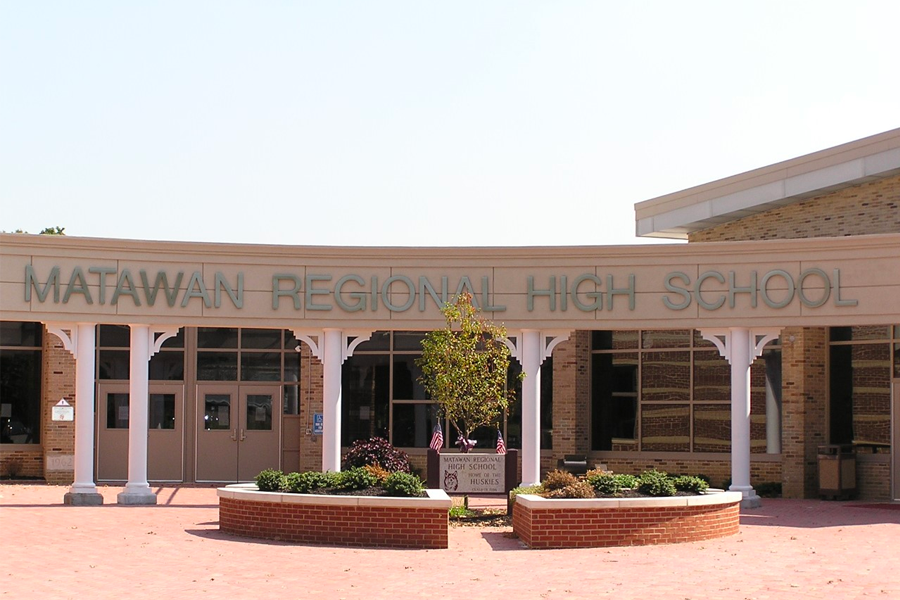
More than 200 students with interest in STEM, business and marketing attended the presentation. “This was a great opportunity for our students to learn more about careers available that they may have not known existed, as well as personal insight from three NJFX representatives in various stages of their careers,” comments Sean Cronin, Assistant Principal and Supervisor for the Math and Science Departments at Matawan Regional High School. “The students had great questions and seemed engaged and interested in the topic.”
###
About NJFX:
NJFX is a Tier 3 Carrier Neutral Cable Landing Station campus. Our colocation ecosystem has expanded to over 35 network operators offering flexibility, reliability, and security. Our Wall, NJ location provides direct access to multiple subsea cable systems giving our carriers diverse connectivity solutions and offers direct interconnection without recurring cross-connect fees.
Windstream Extends 100G Network from Ashburn, VA to NJFX January 22, 2016 Leading data center and colocation solutions provider New Jersey Fiber Exchange (NJFX) and
Garden State’s Newest Data Center Gets Direct Fiber Tap to Brazil and Beyond January 22, 2016 New Jersey Fiber Exchange (NJFX) this week announced it
Windstream Expands Its 100G Network to NJFX’s Meet-Me Room at Tata Communications’ Cable Landing Station January 18, 2016 New 230-Mile Extension Connects
Windstream Visits NJFX, Tata at the Jersey Shore January 16, 2016 Windstream has extended its 100G buildout to the Jersey Shore. The 230+ mile network expansion
U.S. sensors detect Russian submarines near underwater cables November 22, 2016 Washington (CNN) – When a Russian military ship called the Yantar suddenly crossed the Atlantic
The Cyberthreat Under the Street November 12, 2015 (NY Times) – WITHIN the last year there have been 16 so-called fiber cuts in the San Francisco
A Shifting Economy Means a New Look at Majors, Job Outlook Post High School Read More »
As we realize connecting virtually is crucial to our current reality, we understand the infrastructure enabling that connection has never been more important. Today, solid network infrastructure with reliable and diverse paths is not a “nice to have”, it’s a must-have.
Originally published by Data Center Dynamics on May 18, 2020.
WALL TOWNSHIP, NJ – In the past, we might have seen a need to reroute or redirect traffic for a brief period. Disaster recovery companies were the norm, providing an alternative for a day or two. Hurricane Sandy, which hit the US east coast back in 2012, taught us that having a network route around New York could offer much needed increased resiliency, and that was eye-opening. Today, the game plan is not “what is my back up plan for the next two days?”, but “where do I go for the next three months?”
Carriers need to re-route traffic and it must be working from the DR sites. Or, consider if you have a remote workforce, do you have a plan for your US employees to interact with your Frankfurt and London offices, using your home internet connection? It still needs to be secure. It still needs to go through a centralized data center on both sides of the pond. Again, all the employees have to be able to get into those data centers via home modems to make sure traffic can then go across the subsea cables between Europe and the United States.
Avoiding single points of failure
So, keeping this all mind, we should be wondering whether the carriers and multinational enterprises truly know how their networks are orchestrated so they can avoid single points of failure. If you have an international or domestic network issue, but you don’t know how your network has been routed or you don’t know how you access your subsea cable, you really can’t have confidence in your network reliability.
Now more than ever, we need to know how our networks work. We need cable diversity, both terrestrially and at the subsea level. If, for example, the U.S. pandemic epicenter – New York City – will be under quarantine for an extended period and you potentially need to re-route your traffic, what do you do? Do you know who to call and can you count on them to be able to do it? Hopefully, someone on your team thought through the ‘what-ifs’, put it into the network agreements so that re-routes could be done without having to physically travel to lower Manhattan.
The NY metro area survived 9/11, but with all the major carrier hotels in one concentrated area, it was a challenge. Back then, we were all focused on it. We said we can never let that happen again. So, many of the data centers went to New Jersey. Then, Hurricane Sandy hit, and we said we have to make sure we have alternate sites and alternate ways to do things. But they left all the international communications — the subsea system network hubs — in NYC. The data was sitting outside NYC, but all the important interconnection points for the global networks were left in Lower Manhattan. Legacy subsea systems, the ones built between 1999 and 2004, are still handing off 85 percent of their traffic through Lower Manhattan. That’s a staggering amount of voice and data concentrated in one area.
However, companies like DE-CIX are expanding beyond the original lower Manhattan hub. The company offers peering by having a point-of-presence in 15 facilities in and around the Tri-State area, creating a metro ring of service for ISPs.
“Our model relies on distribution. The more facilities we can enable and all to the same virtual platform, the better. From the customer’s perspective, it is extremely important for all types of networks. While you may be physically shut in, you are digitally free and it has never been more obvious that freedom is crucial and must be delivered reliably,” states Ivo Ivanov, COO of DE-CIX. “Every single type of network wants to rely on this, streaming platforms like Netflix and Amazon Prime, collaboration platforms like WebEx and Zoom, gaming platforms, financial services, healthcare and supply chain. The beauty is in the diversity. We need this diverse and robust ecosystem to grow.”
In this current crisis, 80 percent of all major US providers are present at NJFX. In my mind, the world’s fastest-growing internet exchange, DE-CIX, is leading the way. We have some of the previous challenges covered, such as having control of the property, fiber points and entry manholes, along with an ecosystem consisting of seven independent facility-based terrestrial telecommunications operators (some with dual underground systems), four physical subsea cables with SLTE gear – all interconnecting three continents. The largest internet operators are all present.
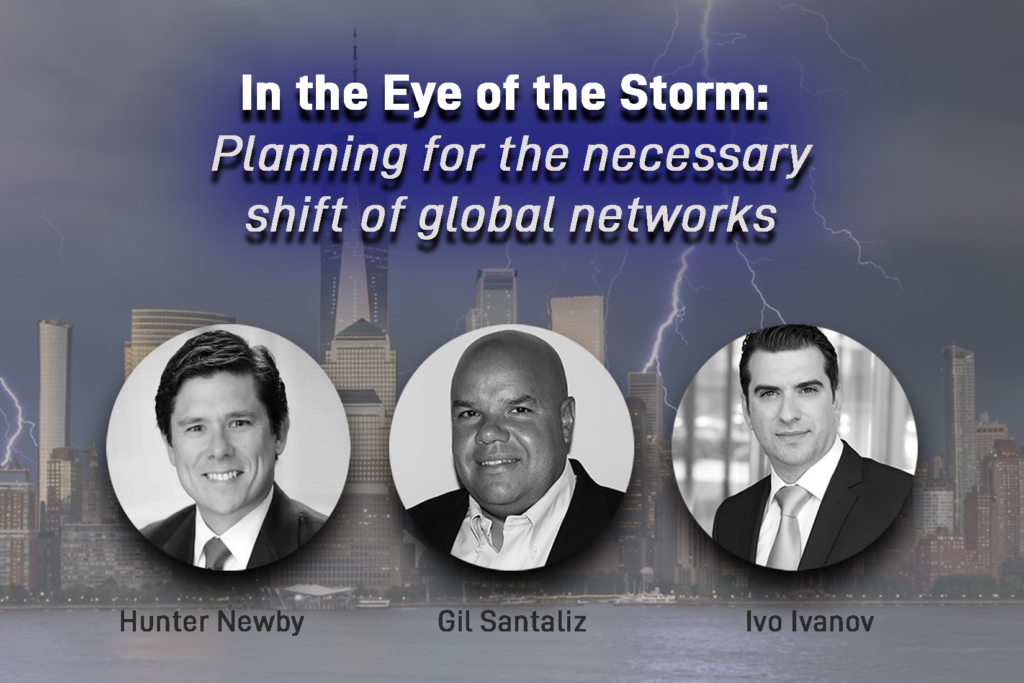
Hunter Newby, Owner of Newby Ventures was one of the original architects of the modern colocation facility with meet-me rooms, cross-connects and network interconnection all in one place. “Change is the only constant. This is an evolution, not a journey, it doesn’t end with one thing. I was around when (the last round of) new subsea cables were being built. The next generation is coming, and it’s logical that the new subsea cables may not be terminating in the same facilities on the east coast,” comments Newby. “There must be vision and foresight as we plan for the next generation of connectivity.”
The beauty of the telecoms industry is that it is always evolving. Through collaboration, strong partnerships and leveraging new architecture models we, as an industry, can better prepare and ensure continuity of global communications. No matter what may come our way. The future is bright, let’s work together.
###
About NJFX:
NJFX is a Tier 3 Carrier Neutral Cable Landing Station campus. Our colocation ecosystem has expanded to over 35 network operators offering flexibility, reliability, and security. Our Wall, NJ location provides direct access to multiple subsea cable systems giving our carriers diverse connectivity solutions and offers direct interconnection without recurring cross-connect fees.
Windstream Extends 100G Network from Ashburn, VA to NJFX January 22, 2016 Leading data center and colocation solutions provider New Jersey Fiber Exchange (NJFX) and
Garden State’s Newest Data Center Gets Direct Fiber Tap to Brazil and Beyond January 22, 2016 New Jersey Fiber Exchange (NJFX) this week announced it
Windstream Expands Its 100G Network to NJFX’s Meet-Me Room at Tata Communications’ Cable Landing Station January 18, 2016 New 230-Mile Extension Connects
Windstream Visits NJFX, Tata at the Jersey Shore January 16, 2016 Windstream has extended its 100G buildout to the Jersey Shore. The 230+ mile network expansion
U.S. sensors detect Russian submarines near underwater cables November 22, 2016 Washington (CNN) – When a Russian military ship called the Yantar suddenly crossed the Atlantic
The Cyberthreat Under the Street November 12, 2015 (NY Times) – WITHIN the last year there have been 16 so-called fiber cuts in the San Francisco
In the Eye of the Storm: Planning for the necessary shift of global networks Read More »

Login to your account