Industry News

Experts in Infrastructure from the Data Center to the Desktop Interviews CEO Gil Santaliz
Experts in Infrastructure from the Data Center to the Desktop Interviews CEO Gil Santaliz

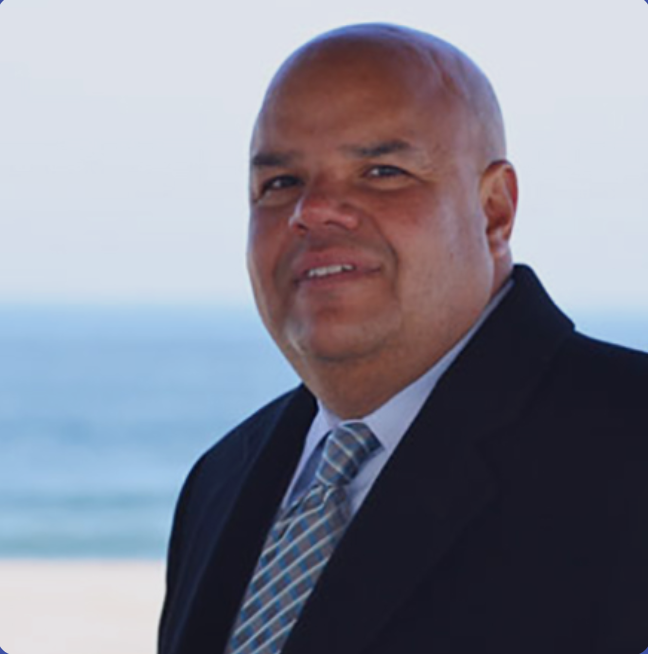
Strongbow Group, Managing Director of Engagement Strategy, Barry Platzman, recently sat down with the Founder & CEO of New Jersey Fiber Exchange (NJFX), Gil Santaliz to discuss his unique perspective on global connectivity and the nuances of designing network solutions for optimal performance.

Gil Santaliz

CEO

Strongbow Group Newsletter – Summer 2022

Published on June 28, 2022

Wall Township –

BP: So Gil, can you start by giving us a primer on NJFX?

GS: NJFX is a subsea cable landing station for the North American market, located here in NJ. Unlike traditional landing stations, owned and operated by established carriers like AT&T and Verizon, NJFX is a completely neutral environment. This neutrality creates an open environment that gives our customers confidence and ensures there is no conflict of interest between operator and landlord. Over time, we have expanded our operation to include 30+ operators in a diverse hub that offers “middle mile infrastructure”.

BP: When enterprise customers buy global connectivity, do you think they understand what they are buying?

GS: Good question, I would have to say that often they do not. They certainly know the beginning point “A” and an endpoint “Z”, but they don’t understand the underlying infrastructure between those points, and over time, obfuscation only increases. At NJFX, we work with our clients in great detail to make sure they understand everything that is happening from our location to their endpoint, including cable capacity, bandwidth, others using the same path, and unique geographical vulnerabilities. In the past, an enterprise might know the specific cable they’re riding, but the underlying paths and subtending carriers are frequent blind spots for many customers.

BP: How do customers address this “blind spot”, do they see it as an issue or something they need to address?

GS: As soon as there is an outage and they realize their planned diversity is ineffective, yes there is an issue to address. Unfortunately, network operators are reluctant to share route details, due to regulatory constraints and security concerns, where operators could become vulnerable to nefarious interference with their services if they reveal too much. Only the largest enterprises who put pressure on the system are able to get access to this information under NDA, and even then, it could take 3-6 months to get the information the enterprise needs. Circuit design teams should push for a complete walk-through of the backhaul systems, hubs used and the fiber optics connecting various subsea stations.

BP: How does NJFX help its customers with this problem?

GS: At NJFX we take the time to ‘peel back the onion’ for our customers, explaining what their traditional carrier is actually buying from someone else and what they are directly providing. We then facilitate introductions to the subsea and backhaul operators, allowing our clients to reverse engineer current routes and more diverse alternatives. In some cases, we orchestrate deals front-to-back; for example, a large financial firm may take the time to understand the market and then go back to their carrier with a set of requirements and specific cables to include in their design. This is especially important for global organizations, who may require certain cable paths that avoid metropolitan hubs like London or Paris since they already have circuits in those cities. You want to limit your vulnerability and we have the insight and best practices to work with these operators when they are designing the network.

BP: Pivoting to the old adage of “Self-Healing”, is this still a term that we can or should use?

GS: I would say that term does go back 20-25 years, back to the days when carriers owned their own network infrastructure. To level set on terminology – if you owned the network, you could provide two paths: a primary and one to take over in case the first should fail… a “self-healing ring”. This has changed over the years, as carriers have become reliant on other partners, and now lack insight into underlying paths. The term self-healing is often used without understanding what it really means. More discerning buyers will purchase diverse paths from different carriers all operating in parallel, enabling them to sustain 2-3 hits on their service without being affected.

BP: Are fiber cuts trending up or down in your view?

GS: Yes, as a result of 5G deployments, carriers are opening more splice boxes on long haul and metropolitan fiber. Over the years, characteristics of the fiber in the US have changed; whereas before long haul fiber was untouchable, it isn’t anymore. And with the recent need to capitalize on existing assets, long-haul routes might experience interruptions because of 5G deployments, which are now more and more common.

BP: What about outside of the United States, are we seeing the same trends with sub-sea?

GS: Subsea is a very different animal – there are fewer outages, but when there is one, it’s bad. That is not to say that there is never an issue; despite routes being clearly marked on maritime charts, a cargo ship might hit the cable with an anchor. Nowadays, however, subsea operators have visibility into “shunt faults” – a break in the insulation of the cable – and can be proactive about repairing them before the exposed cable is hit again. But should the worst happen, you are looking at 3-6 weeks of outage depending on how prepared the operator is for repair. This is why multiple, diverse paths are critical to a resilient enterprise network. A bit of trivia for your readers here: there is an Atlantic underwater canyon called Porcupine Sea Bight with 95% convergence of transatlantic systems; an incident on that island would essentially be catastrophic, cutting off EMEA from North America. Only one system does not traverse that route – a bypass solution offered via NJFX.

BP: Any pearls of wisdom that you can offer to enterprise customers when designing global networks?

GS: Commit the resources required to understand what you are buying. We live in a world that is reticent to change, but given the time-sensitivity of applications nowadays, a 4–5-hour outage is catastrophic. Enterprises should make path supervision a part of their circuit lifecycle management process to ensure their network paths haven’t changed since they first purchased those circuits. I would also recommend adding contractual assurances to require notice of any changes to fiber in advance of the work.

Thanks very much Gil, we enjoyed hearing about NJFX and receiving the benefit of your thoughts on the evolving infrastructure – Barry Platzman

Click here to read the full Strongbow Group Newsletter

About NJFX:

NJFX is a Tier 3 Carrier Neutral Cable Landing Station campus. Our colocation ecosystem has expanded to over 35 network operators offering flexibility, reliability, and security. Our Wall, NJ location provides direct access to multiple subsea cable systems giving our carriers diverse connectivity solutions and offers direct interconnection without recurring cross-connect fees.

Experts in Infrastructure from the Data Center to the Desktop Interviews CEO Gil Santaliz Read More »

Flying The Skies to Wire the Seas

Flying The Skies to Wire the Seas

Should the Subsea Cable Industry Stop Traveling?


Gil Santaliz

CEO

SubTel Forum Magazine #124 – Global Capacity

Published on May

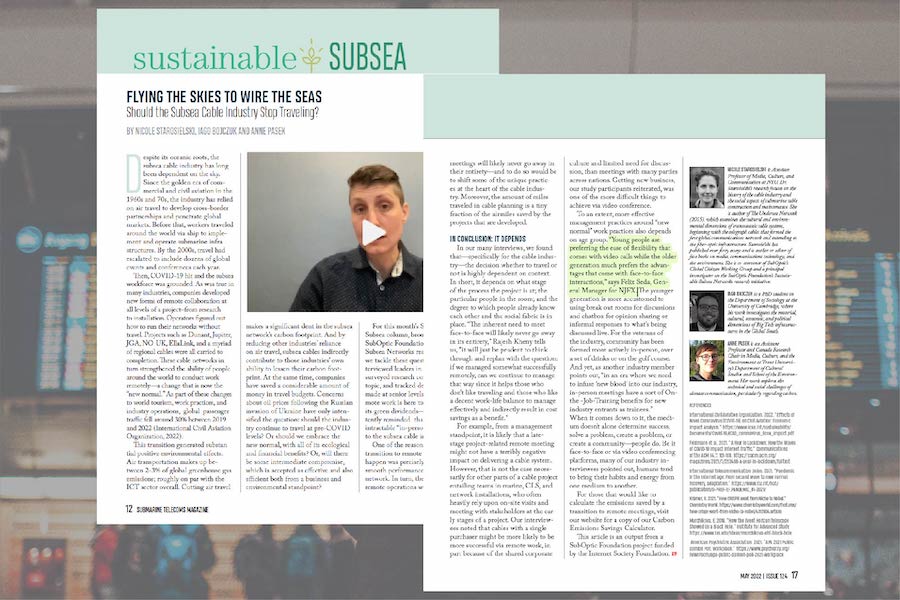
Subtel Forum Magazine – To an extent, more effective management practices around “new normal” work practices also depend on age group.

“Young people are preferring the ease of flexibility that comes with video calls while the older generation much prefers the advantages that come with face-to-face interactions,” says Felix Seda, General Manager for NJFX.

The younger generation is more accustomed to using break-out rooms for discussions and chatbox for opinion sharing or informal responses to what’s being discussed live. For the veterans of the industry, the community has been formed more actively in person, over a set of drinks, or on the golf course. And yet, as another industry member points out, “ in an era where we need to infuse ‘new blood’ into our industry, in-person meetings have a sort of On the-Job-Training benefits for new industry entrants as trainees.” When it comes down to it, the medium doesn’t alone determine success, solve a problem, create a problem, or create a community—people do. Be it face-to-face or via video conferencing platforms, many of our industry interviewees pointed out, that humans tend to bring their habits and energy

Click here to read the full article.

Click here to read this month’s issue of SubTel Forum Magazine.

About NJFX:

NJFX is a Tier 3 Carrier Neutral Cable Landing Station campus. Our colocation ecosystem has expanded to over 35 network operators offering flexibility, reliability, and security. Our Wall, NJ location provides direct access to multiple subsea cable systems giving our carriers diverse connectivity solutions and offers direct interconnection without recurring cross-connect fees.

More In the News

Flying The Skies to Wire the Seas Read More »
Felix Seda Awarded Capacity Media’s Power 100!

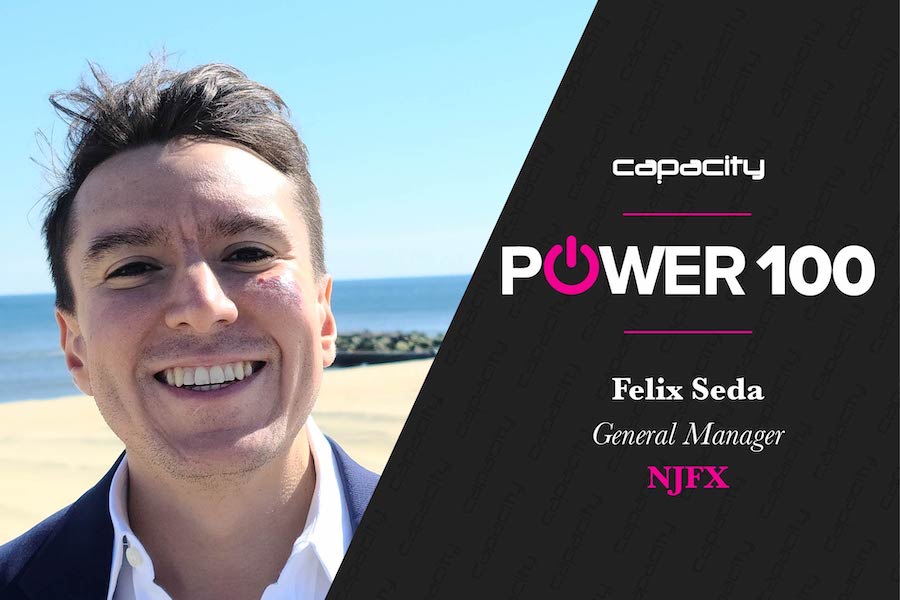
Felix Seda Awarded Capacity Media’s Power 100!

Nominated by the industry and compiled by Capacity, the 2022 Power 100 profiles the trailblazers, innovators, and leaders driving the global digital infrastructure space. Now in its fourth-year, the list is who is who of the most influential people in our field.

Felix Seda

General Manager

June 13, 2022

CAPACITY EDITORIAL – Felix Seda is dedicated to bringing young talent into the telecommunication industry by spearheading several millennial-focused initiatives to encourage the education and engagement of young professionals. He created the Millennials in Telecom Reception at PTC in 2020, aimed at bringing young telecom employees together to network and engage with select industry veterans.

Felix sees value in recruiting young professionals, many are digital natives, and the unique perspective they may bring to an industry that is often dominated by veterans. The involvement and development of these fresh, young professionals will do a great deal to propel the industry into the future.

Felix is working closely with the PTC Advisory Council for young professionals to be more involved at industry conferences and secure a seat at the table where pivotal conversations shape the industry’s future. Felix is working to establish a Buy One Get One Free program that will allow nominated individuals from member organizations to attend the conference with free registration.

Aside from helping shape the future of the Telecom industry, Felix has been instrumental in growing the ecosystem at NJFX’s CLS connectivity campus. His involvement in network development helped establish new logos at NJFX such as AT&T, Eastlink, and UPIX.

View the fourth annual Power 100 in the June/July issue here.

About NJFX

NJFX is a Tier 3 Carrier Neutral Cable Landing Station campus. Our colocation ecosystem has expanded to over 35 network operators offering flexibility, reliability, and security. Our Wall, NJ location provides direct access to multiple subsea cable systems giving our carriers diverse connectivity solutions and offers direct interconnection without recurring cross-connect fees.

Media Contact:
Emily Newman, Marketing and Public Relations Coordinator
[email protected]

More In the News

Nominated by the industry and compiled by Capacity, the 2022 Power 100 profiles the trailblazers, innovators, and leaders driving the global digital infrastructure space. Now in its fourth-year, the list is who is who of the most influential people in our field.

June 13, 2022 CAPACITY EDITORIALFelix Seda is dedicated to bringing young talent into the telecommunication industry by spearheading several millennial-focused initiatives to encourage the education and engagement of young professionals. He created the Millennials in Telecom Reception at PTC in 2020, aimed at bringing young telecom employees together to network and engage with select industry veterans. Felix sees value in recruiting young professionals, many are digital natives, and the unique perspective they may bring to an industry that is often dominated by veterans. The involvement and development of these fresh, young professionals will do a great deal to propel the industry into the future. Felix is working closely with the PTC Advisory Council for young professionals to be more involved at industry conferences and secure a seat at the table where pivotal conversations shape the industry’s future. Felix is working to establish a Buy One Get One Free program that will allow nominated individuals from member organizations to attend the conference with free registration. Aside from helping shape the future of the Telecom industry, Felix has been instrumental in growing the ecosystem at NJFX’s CLS connectivity campus. His involvement in network development helped establish new logos at NJFX such as AT&T, Eastlink, and UPIX. View the fourth annual Power 100 in the June/July issue here.  About NJFX NJFX owns and operates a 64,800 square foot purpose-built Tier 3 Cable Landing Station (CLS) Colocation campus in Wall, NJ. This unique campus is the only carrier-neutral CLS colocation campus in the U.S supported by several route-independent carriers that offer direct access to multiple independent subsea cable systems interconnecting North America, Europe, South America and the Caribbean. The facility offers direct access to TGN1, TGN2, and Seabras. The building is the subsea cable landing of HAVFRUE/AEC2 this year as well as the Confluence system in the near future. High and low-density colocation solutions are available with 24/7 support.  
Media Contact:
Emily Newman, Marketing and Public Relations Coordinator
[email protected]

Felix Seda Awarded Capacity Media’s Power 100! Read More »
Keeping The Lights On

Keeping The Lights On

From 9/11 to Hurricane Sandy, the US has had a number of wake-up calls when it comes to its infrastructure. NJFX founder and CEO Gil Santaliz tells Melanie Mingas where the next points of failure could occur

Gil Santaliz

CEO

May 10, 2022

Capacity Media – Despite the rapid and widespread deployment of advanced connectivity infrastructure, the US has experienced several major outages over the past 20 years that happened just when the country needed its networks the most. The first major lesson in network resilience came on 9/11 when infrastructure damage and traffic surges took out mobile networks.

“9/11 was a wake-up call to how global connectivity actually operates,”

says NJFX founder and CEO Gil Santaliz.

“The number of calls getting through was one in four or one in 10, depending on the time of day. The basic lesson learned was that phones aren’t meant for everyone to use at the same time,” he adds.

Then, in 2012, came Hurricane Sandy. This event took out mobile and fixed connectivity as well as TV and entire data centres – what’s more, it proved that traditional subsea architectures were flawed. Aggregating traffic to route through New York and Miami had created two huge points of failure and the impact was felt as far afield as Europe.

“During Sandy, lower Manhattan lost power for multiple days and many providers lost all their capacity between North America and Europe, while some lost capacity between South America and Europe. Lower Manhattan affected global communications and it was after Sandy that the OTTs started on the path we are on today, and that was to diversify subsea architecture,” he recalls.

Today, New York is “no longer the epicentre” of US telecoms infrastructure and a series of diverse routes make a repeat of 2012 unlikely. However, while the industry has spent the past 20 years experiencing and solving these issues, another has emerged.

Twenty years ago, data centres occupied old corporate units across Manhattan; now they have largely moved to states with swathes of vacant land and tax incentives. “But what we left behind was the internet,” Santaliz says. “In those buildings in New York City, in Miami, where everything comes to one point to intersect.”

He is referring to the middle mile, the everything between the two last miles, where the bulk of network activity is concentrated.

He continues: “Internet connectivity now is dependent on infrastructure built 20, 40, 60 years ago that used to be office buildings or department stores. But once I leave that data centre or home, I have to compute and process that data – and, unfortunately, a lot of that middle mile infrastructure was not purpose-built, it was inherited.”

The solution sounds simple enough: continue to upgrade, but with business models based on collaboration, and focus on the future, rather than the capacity demands of the present. The catch is that such endeavours are expensive.

To help things along, late last year the US introduced a middle mile funding programme, intended to close gaps in underserved areas and create alternative network paths. As part of the US$65 billion Infrastructure Investment and Jobs Act, it will see $1 billion made available to carriers.

“I think the new standard has to be to invest with a long-term view. Don’t put band-aids on problems you’re having, and don’t add more capacity in buildings that don’t make long-term sense. Start thinking about the end in mind, because a band-aid is only as good as a band-aid. You have to plan for a full solution,” Santaliz says.

“If New York City is still a single point of failure in your network, shame on you – because we have known that for a long time. Build resiliency into your platform,” he adds.

Different roads

For its part, NJFX celebrates seven years in operation in September and has a target to host 60 network operators by the end of 2023, up from 45 by the end of this year.

On the realities of that, Santaliz says: “They have to invest with you, they have to plan how to come to the building. If they all took the same road to bring their fibre to the building, we would have a single point of failure on that road that comes to the facility. We took the time to explai
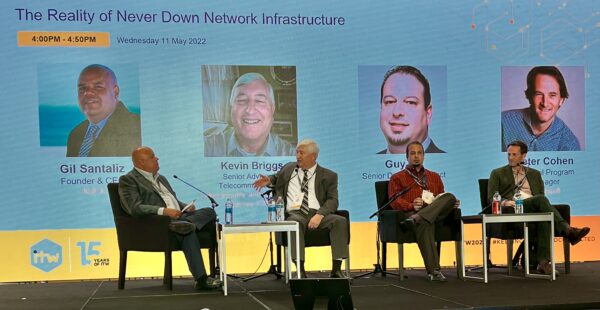
Gil Santaliz moderates a session at ITW 2022 discussing 'The Never Down Internet Infrastructure'
Starting from the left: Gil Santaliz NJFX, Kevin Briggs CISA, Guy Tal LUMEN, Peter Cohen MICROSOFT

n to each different provider to take different roads.”

These issues are explored later today in the 4pm panel on stage A, The Reality of Never Down Network Infrastructure. Joining Santaliz on the panel is Kevin Briggs, regional protective security adviser at the Cybersecurity and Infrastructure Agency(CISA), which NJFX has worked with recently. Briggs is expe ted to share further details on how the agency aims to work with carriers.

“A lot of us in the industry are afraid of regulations, but it’s just the opposite. This group is here to try and provide support and resources and provide a way to collaborate on common issues that all carriers have. How do we keep these networks up and running and never down?”

###

About NJFX:

NJFX is a Tier 3 Carrier Neutral Cable Landing Station campus. Our colocation ecosystem has expanded to over 35 network operators offering flexibility, reliability, and security. Our Wall, NJ location provides direct access to multiple subsea cable systems giving our carriers diverse connectivity solutions and offers direct interconnection without recurring cross-connect fees.

More In the News

Keeping The Lights On Read More »

SUSTAINABLE SUBSEA AT NJFX

Sustainable Subsea at NJFX

Energy + Telecommunications: Bringing together worlds at the Cable landing station 

SubTel Forum Magazine #123 – Finance & Legal

Published on 

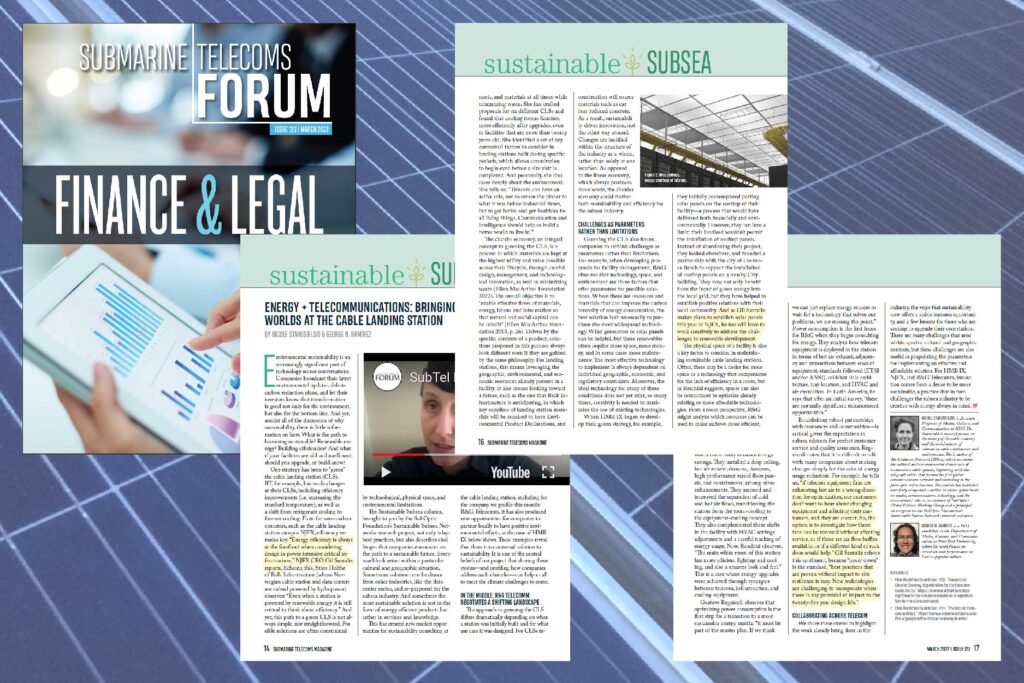
Even for zero-carbon operators, such as the cable landing station campus NJFX, efficiency remains key.

“Energy efficiency is always at the forefront when considering design in power intensive critical infrastructure,” NJFX CEO Gil Santaliz reports.

And as Gil Santaliz makes plans to establish solar panels this year at NJFX, he too will have to work creatively to address the challenges to renewable development.

“if telecom equipment fans are exhausting hot air to a wrong direction for optimization, our customers don’t want to hear about changing equipment and affecting their customers, and they are correct. So, the option is to investigate how those fans can be reversed without affecting service, or if there are air flow baffles available, or if a different kind of rack door would help.”

Gil Santaliz echoes this sentiment: because “never down” is the standard, “best practices that are proven without impact to site resilience is easy. New technologies are challenging to incorporate when there is any potential of impact to the twenty-five year design life.”


Click here to read the full article about Sustainable Subsea.

Click here to read this months issue of SubTel Forum Magazine.

###

About NJFX:

NJFX is a Tier 3 Carrier Neutral Cable Landing Station campus. Our colocation ecosystem has expanded to over 35 network operators offering flexibility, reliability, and security. Our Wall, NJ location provides direct access to multiple subsea cable systems giving our carriers diverse connectivity solutions and offers direct interconnection without recurring cross-connect fees.

More In the News

SUSTAINABLE SUBSEA AT NJFX Read More »
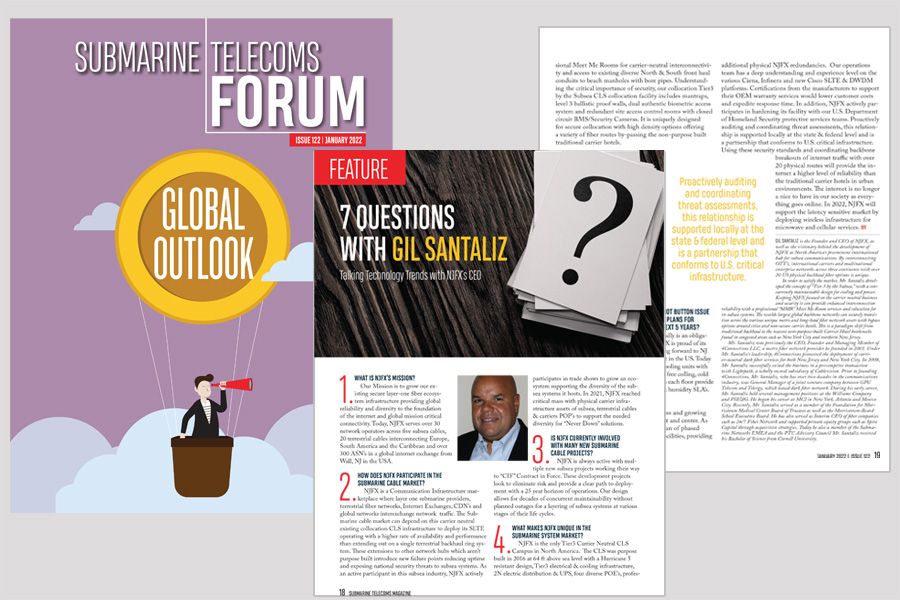
7 QUESTIONS WITH GIL SANTALIZ

7 QUESTIONS WITH GIL SANTALIZ

Talking Technology Trends with NJFX’s CEO

As Featured in SUBMARINE TELECOMS FORUM (Issue 122 January 2022)

Gil Santaliz

CEO

January 19, 2022

1. WHAT IS NJFX’S MISSION?

Our Mission is to grow our existing secure layer-one fiber ecosystem infrastructure providing global reliability and diversity to the foundation of the internet and global mission critical connectivity. Today, NJFX serves over 30 network operators across five subsea cables, 20 terrestrial cables interconnecting Europe, South America and the Caribbean and over 300 ASN’s in a global internet exchange from Wall, NJ in the USA.

2. HOW DOES NJFX PARTICIPATE IN THE SUBMARINE CABLE MARKET?

NJFX is a Communication Infrastructure marketplace where layer one submarine providers, terrestrial fiber networks, Internet Exchanges, CDN’s and global networks interexchange network traffic. The Submarine cable market can depend on this carrier neutral existing collocation CLS infrastructure to deploy its SLTE operating with a higher rate of availability and performance than extending out on a single terrestrial backhaul ring system. These extensions to other network hubs which aren’t purpose built introduce new failure points reducing uptime and exposing national security threats to subsea systems. As an active participant in this subsea industry, NJFX actively participates in trade shows to grow an ecosystem supporting the diversity of the subsea systems it hosts. In 2021, NJFX reached critical mass with physical carrier infrastructure assets of subsea, terrestrial cables & carriers POP’s to support the needed diversity for “Never Down” solutions.

3. IS NJFX CURRENTLY INVOLVED WITH MANY NEW SUBMARINE CABLE PROJECTS?

NJFX is always active with multiple new subsea projects working their way to “CIF” Contract in Force. These development projects look to eliminate risk and provide a clear path to deployment with a 25 year horizon of operations. Our design allows for decades of concurrent maintainability without planned outages for a layering of subsea systems at various stages of their life cycles.

4. WHAT MAKES NJFX UNIQUE IN THE SUBMARINE SYSTEM MARKET?

NJFX is the only Tier3 Carrier Neutral CLS Campus in North America. The CLS was purpose built in 2016 at 64 ft above sea level with a Hurricane 5 resistant design, Tier3 electrical & cooling infrastructure, 2N electric distribution & UPS, four diverse POE’s, profes- FEATURE JANUARY 2022 | ISSUE 122 19 sional Meet Me Rooms for carrier-neutral interconnectivity and access to existing diverse North & South front haul conduits to beach manholes with bore pipes. Understanding the critical importance of security, our collocation Tier3 by the Subsea CLS collocation facility includes mantraps, level 3 ballistic proof walls, dual authentic biometric access system and redundant site access control rooms with closed circuit BMS/Security Cameras. It is uniquely designed for secure collocation with high density options offering a variety of fiber routes by-passing the non-purpose built traditional carrier hotels.

5. WHAT ARE THE ELEMENTS OF NJFX’S SUCCESS?

6. AS SUSTAINABILITY HAS BECOME A HOT BUTTON ISSUE IN OUR INDUSTRY, WHAT ARE NJFX’S PLANS FOR SUSTAINABLE OPERATION FOR THE NEXT 5 YEARS?

7. WHAT IS NEXT FOR NJFX?

Read the remaining answers and original article at SubTelForum (page 15-17) 

https://issuu.com/subtelforum/docs/subtel_forum_122

###

About NJFX:

NJFX is a Tier 3 Carrier Neutral Cable Landing Station campus. Our colocation ecosystem has expanded to over 35 network operators offering flexibility, reliability, and security. Our Wall, NJ location provides direct access to multiple subsea cable systems giving our carriers diverse connectivity solutions and offers direct interconnection without recurring cross-connect fees.

More In the News

7 QUESTIONS WITH GIL SANTALIZ Read More »
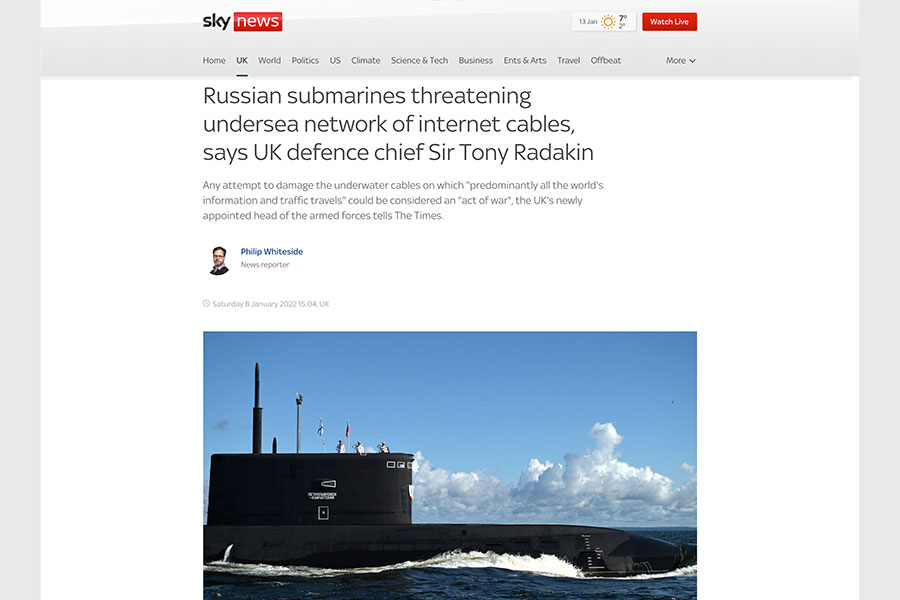
Russian submarines threatening undersea network of internet cables, says UK defence chief Sir Tony Radakin

Russian submarines threatening undersea network of internet cables, says UK defence chief Sir Tony Radakin

Any attempt to damage the underwater cables on which “predominantly all the world’s information and traffic travels” could be considered an “act of war”, the UK’s newly appointed head of the armed forces tells The Times.

Original article posted at SKY NEWS
by Philip Whiteside

The head of Britain’s armed forces is warning Russian submarines are threatening a crucial network of underwater cables that carry information around the world.

Admiral Sir Tony Radakin, who was appointed chief of the defence staff in October, said the undersea cables that transmit internet data are “the world’s real information system”.

Sir Tony – a former head of the Royal Navy – told The Times newspaper there had been a “phenomenal increase in Russian submarine and underwater activity” in the last 20 years.

It meant Moscow could “put at risk and potentially exploit the world’s real information system, which is undersea cables that go all around the world”.

“That is where predominantly all the world’s information and traffic travels,” he added. “Russia has grown the capability to put at threat those undersea cables and potentially exploit those undersea cables.”

###

About NJFX:

NJFX is a Tier 3 Carrier Neutral Cable Landing Station campus. Our colocation ecosystem has expanded to over 35 network operators offering flexibility, reliability, and security. Our Wall, NJ location provides direct access to multiple subsea cable systems giving our carriers diverse connectivity solutions and offers direct interconnection without recurring cross-connect fees.

More In the News

Russian submarines threatening undersea network of internet cables, says UK defence chief Sir Tony Radakin Read More »

DigitalInfra Network interviews Gil Santaliz and Peter Narebo

DigitalInfra Network interviews Gil Santaliz and Peter Narebo

Ryan Imkemeier Explains the Importance of Equipment Maintenance, Vendor Relationships, Electrical Distribution & Managing the Team

Gil Santaliz

CEO

December 28, 2021

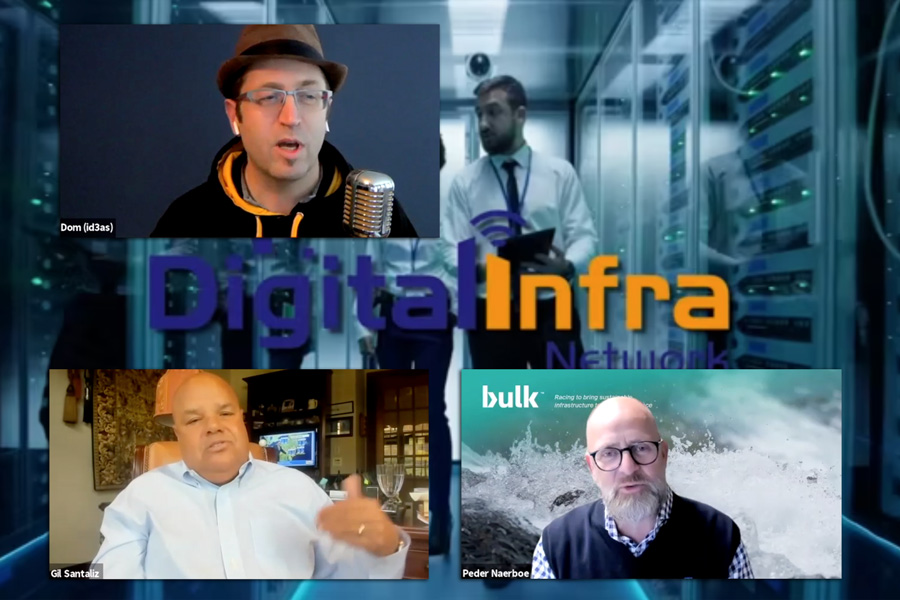
DigitalInfra Network has Dom Robinson interview Gil Santaliz, CEO of NJFX & Peder Narebo CEO of Bulk Infrastructure. Listen as they explore strategies to improve sustainability within the growing need for Data Center infrastructure as well as discuss how Subsea Fiber routes are unlocking global renewable energy sources.

###

About NJFX:

NJFX is a Tier 3 Carrier Neutral Cable Landing Station campus. Our colocation ecosystem has expanded to over 35 network operators offering flexibility, reliability, and security. Our Wall, NJ location provides direct access to multiple subsea cable systems giving our carriers diverse connectivity solutions and offers direct interconnection without recurring cross-connect fees.

More In the News

DigitalInfra Network interviews Gil Santaliz and Peter Narebo Read More »
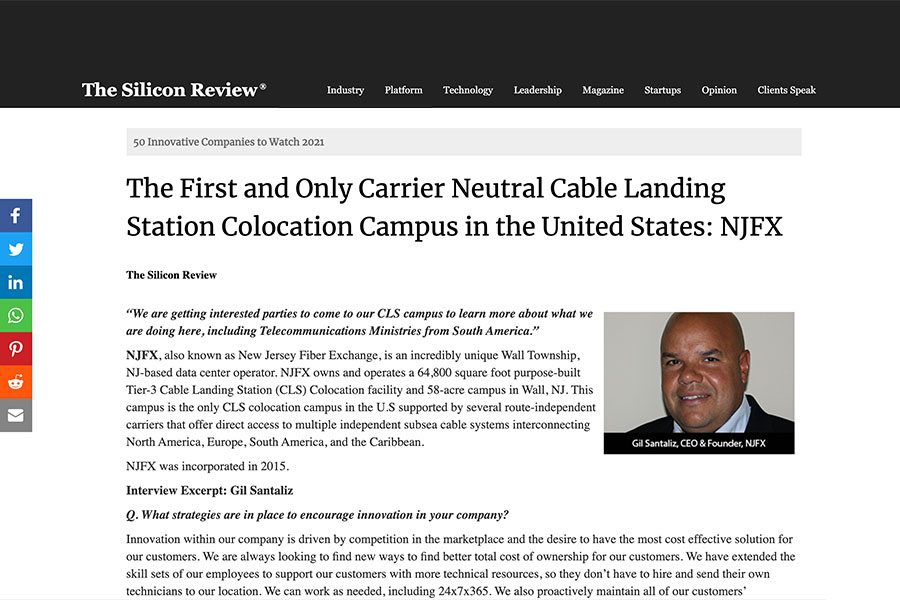
50 Innovative Companies to Watch 2021

50 Innovative Companies to Watch 2021

The First and Only Carrier Neutral Cable Landing Station Colocation Campus in the United States: NJFX

“We are getting interested parties to come to our CLS campus to learn more about what we are doing here, including Telecommunications Ministries from South America.”

Gil Santaliz

CEO

October 1, 2021

NJFX, also known as New Jersey Fiber Exchange, is an incredibly unique Wall Township, NJ-based data center operator. NJFX owns and operates a 64,800 square foot purpose-built Tier-3 Cable Landing Station (CLS) Colocation facility and 58-acre campus in Wall, NJ. This campus is the only CLS colocation campus in the U.S supported by several route-independent carriers that offer direct access to multiple independent subsea cable systems interconnecting North America, Europe, South America, and the Caribbean.

NJFX was incorporated in 2015.

Interview Excerpt: Gil Santaliz

Q. What strategies are in place to encourage innovation in your company?

Innovation within our company is driven by competition in the marketplace and the desire to have the most cost effective solution for our customers. We are always looking to find new ways to find better total cost of ownership for our customers. We have extended the skill sets of our employees to support our customers with more technical resources, so they don’t have to hire and send their own technicians to our location. We can work as needed, including 24x7x365. We also proactively maintain all of our customers’ equipment. This makes it virtually unnecessary for our customers to send their own techs, incurring travel and lodging costs in addition to compensation. We have the skill sets and talents to do it internally, increasing uptime, allowing for upgrades, and having predictability in operations.

Q. How uniquely do you address your clients’ needs, given that NJFX offers flexibility, reliability, and security that global carriers, content providers, and enterprise or government entities utilize to drive network reliability, while reducing expenses?

At NJFX, no two installs are the same—everyone has the availability to design what makes sense for them and we support that kind of creativity. On security, we have taken steps to embrace our relationships with the FBI, the Department of Homeland Security and other state and local agencies. There is an awareness in the industry about security issues and that we must remain proactive. Because we are a country of law and order, we provide confidentiality to our customers to protect their privacy. We hire and retain employees with security clearances to support the rule of law, and support our customers’ needs with folks who can maintain confidentiality and who are trusted by our telecommunications industry.

Q. What makes your HIPAA compliant colocation campus unique?

With this certification, NJFX has achieved the highest standards required by healthcare and financial institutions today. Our highly secure facility is SSAE 16/18 Type 2 certified, and combined with our CLS security standards, places NJFX in a world-class status. By attaining HIPAA compliance certification, it allows the healthcare industry to participate in the NJFX ecosystem confidently.

Q. How does dark fiber play a role in routing between key international locations? And how secure is it?

Layer-1 dark fiber is the infrastructure of communications. Without having multiple dark fiber routes in your facility you don’t have a secure infrastructure. We are close to having over 26 fiber cables managed by various network operators. That represents the physical infrastructure for what makes global communications work. If a client has dark fiber, then they own it and can control the security of their network. A client can physically see if anyone touched or accessed that fiber system.

If a customer doesn’t have dark fiber, then that fiber is lit and managed by their telecom provider.

Q. What new endeavors is your company currently undertaking? 

We’re considering expanding our staff to provide marine protection services to allow our customers to benefit from our local knowledge not only in New Jersey but the subsea industry as a whole. This way, an owner-operator can coordinate protecting their cable with agencies like the Army Corp of Engineers. One example is that recently, the Army Corp of Engineers turned to NJFX for help with a beach replenishment project. We were able to determine the right entity to contact to ensure the beach replenishment would not disturb a subsea cable. We would like to be able to serve as consultants in an official capacity with agencies and organizations such as the Army Corp of Engineers.

Q. Forming and managing innovation teams is overwhelming. That said, how do you keep your decision-makers focused?

Our guiding principles are honesty, integrity, and customer first. We keep that in mind in every interaction we undertake.

Q. Let’s talk about your team of experts and their role at NJFX. How did you form your dream squad, and how unique is it?

Employees at NJFX come with various backgrounds. On the business development side, we have been able to cultivate fresh talent. They “grew up” at NJFX learning the industry from operators and carriers, to understand this business, what’s driving the decision making and the direction of where it’s going and how to adapt our model to support those operator and carrier economics. On the operations side of the company, we hired industry veterans who have lived through every situation possible, and can use that knowledge base and expertise to support our customers. So, it is a nice balance of having a very senior Operations team and a business development team who has learned the industry and building key relationships along the way.

Q. How do you plan to transform your company into a future that is unfolding before you?

Our ultimate goal is to expand beyond New Jersey, and to make our CLS model the standard for landing subsea cables around the world. We are getting interested parties to come to our CLS campus to learn more about what we are doing here, including Telecommunications Ministries from South America. They want to emulate our model, which consists of sound infrastructure plus multiple subsea cables, terrestrial routes, with a network hub. One example is Chile is looking to become a gateway to Asia from South America. Those officials came to NJFX to see how we do it. They want to be able to have applications available at a CLS, including peering, route selection and connectivity to neighboring countries, just as we have here. The idea is to welcome subsea traffic, without hops which are points of failure, exchanging internet capacity as well as directing traffic where it needs to go.

The Leader Upfront

Gil Santaliz, Founder, serves as the Chief Executive Officer of NJFX. He helps carriers strategically diversify connectivity options to key hubs across North/South America/Europe bypassing legacy chokepoints. His innovative approach to thinking outside traditional partnerships and network architecture, led him to establish NJFX’s unique offering.

Mr. Santaliz is the visionary behind a new CLS model that has spurred unprecedented connectivity at the point where subsea and terrestrial cable systems meet. NJFX is North America’s first colocation campus that strategically intersects a carrier-neutral subsea Cable Landing Station meet-me room with an independent Tier-3 colocation facility. He was instrumental in bringing the HAVRUE/AEC-2 subsea system to NJFX, the first new subsea cable traversing the North Atlantic in two decades. The ecosystem Mr. Santaliz has developed helped carriers respond to the demand for increased bandwidth through the COVID-19 pandemic. Most recently, under his leadership, NJFX has received federal approval to become an ITU Development (ITU-D) Sector member, to help connect underserved populations to the internet. The ITU is the United Nations’ specialized agency for information and communication technologies. Notably, NJFX hosted a South American delegation to learn more about its unique CLS campus model. The delegation included Chile’s highest ranking communications official.

Previously, as founder of a metro fiber network company called 4Connections LLC, he Santaliz realized there was a lack of route diversity for carriers. He sold 4Connections to Cablevision, which is now owned by Altice.

Mr. Santaliz is a member of the Submarine Networks EMEA 2020 Advisory Board, and PTC Advisory Board. He earned a bachelor of science from Cornell University.

###

About NJFX:

NJFX is a Tier 3 Carrier Neutral Cable Landing Station campus. Our colocation ecosystem has expanded to over 35 network operators offering flexibility, reliability, and security. Our Wall, NJ location provides direct access to multiple subsea cable systems giving our carriers diverse connectivity solutions and offers direct interconnection without recurring cross-connect fees.

More In the News

50 Innovative Companies to Watch 2021 Read More »
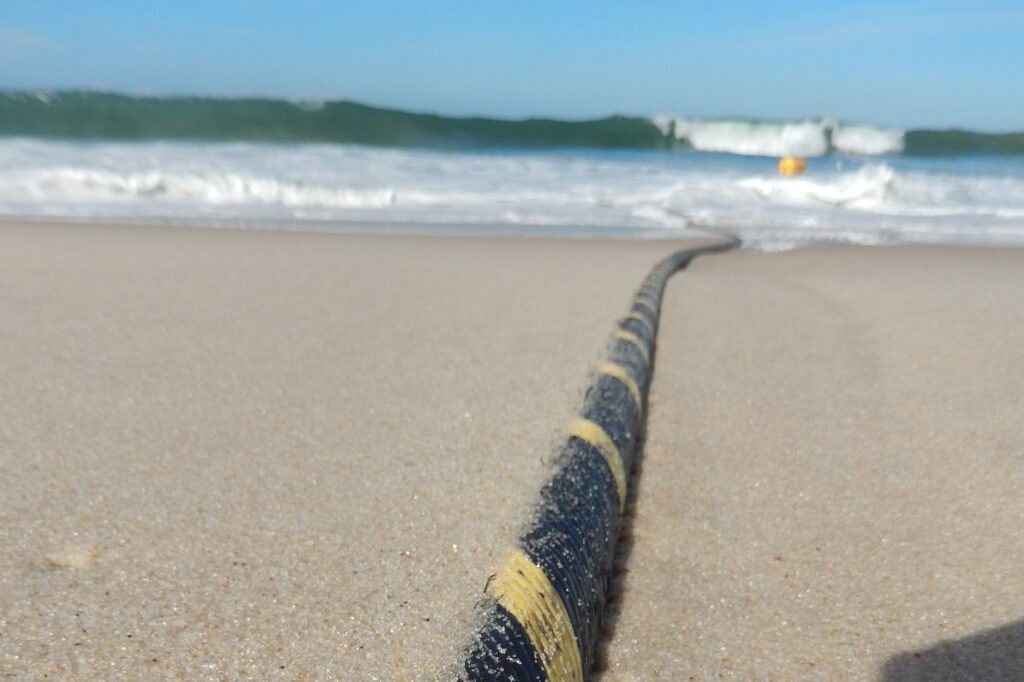
What is a submarine cable? Subsea fiber explained

What is a submarine cable? Subsea fiber explained

Our wireless world depends on a few hundred fiber cables laid on the ocean floor

Original article posted at DataCenterDynamics.com
by Dan Swinhoe

August 31, 2021

Though we live in an increasingly wireless world, that connectivity depends on wires under the ocean.

Subsea or submarine cables are fiber optic cables that connect countries across the world via cables laid on the ocean floor. These cables – often thousands of miles in length – are able to transmit huge amounts of data rapidly from one point to another.

What is a submarine cable?

A submarine cable is a fiber optic cable laid in the ocean, connecting two or more landing points.Rarely much wider than a garden hose, today cables generally comprise of the optical fibers that carry the information, which are then covered in silicon gel, then sheathed in varying layers of plastic, steel wiring, copper, and nylon in order to provide insulation to protect the signal and protect the cable from damage from wildlife, anchors & fishing, or weather & other natural events.

The cables are laid using ships that are modified specifically for this purpose, transporting and slowly laying the ‘wet plant’ infrastructure on the seabed. These special ships can carry thousands of kilometers of optical cable out to sea. A special subsea plow is also used to trough and bury submarine cables along the seabed closer to shorelines where naval activities, such as anchoring and fishing, are most prevalent and could damage submarine cables.

“We’ve had submarine cables for over 150 years,” explains Gil Santaliz, founder and CEO of New Jersey cable landing station NJFX, “and they’ve really been a way for communication between countries and continents.”“The most basic application is communicating what’s happening in one part of the world to another, but we’ve morphed that to allow applications to exist in multiple countries at the same time, to enhance the performance of applications, and to find eco-friendly locations where you can run applications with a zero-carbon footprint yet enjoy the application the country where they don’t have that resource.”

Subsea cables; connecting the world for 170 years

Work to demonstrate the potential of subsea cables began in the 1840s, when Samuel Morse, the inventor of Morse Code, submerged a wire insulated with tarred hemp and India rubber, in the water of New York Harbor and telegraphed through it in 1842.The first commercial cable was laid in 1850, when the English Channel Submarine Telegraph Company laid a telegraph cable between England and France. It was cut weeks later by fishermen thinking it was seaweed. 

A successor company, the Submarine Telegraph Company, laid a second cable the next year and more cables linking the British Isles to mainland Europe followed.In 1854 and completed in 1858, the Transatlantic telegraph cable – which ran from Valentia in western Ireland to Bay of Bulls, Trinity Bay, Newfoundland and was the first to traverse the Atlantic – was laid by the Atlantic Telegraph Company. It only functioned for only three weeks before breaking beyond repair.

The first official telegram to pass between two continents – at a rate of a single character every two minutes – was a letter of congratulations from Queen Victoria of the United Kingdom to President of the United States James Buchanan on August 16. Following progressive signal deterioration, the cable was destroyed after excessive voltage was applied to try and boost the transmission strength. While it was only in operation for a short time, it showed intercontinental communication was possible and a second cable was laid in 1865.The first trans-Pacific cables were completed in 1902 and 1903, linking the US mainland to Hawaii in 1902 and Guam to the Philippines in 1903.The first subsea telephone cable, TAT-1, was laid between 1955 and 1956. 

A joint project between the UK Post Office (of which BT was part for a number of years), the American Telephone and Telegraph company (now AT&T), and the Canadian Overseas Telecommunications Corporation, it was able to carry 35 simultaneous telephone calls.The eighth transatlantic communications cable, TAT-8, was the first fiber optic subsea cable. Constructed in 1988 by a consortium of companies led by AT&T, France Télécom, and British Telecom, the cable was able to carry 280 Mbits per second. It was retired in 2002.Today there are more than 400 subsea cables in operation. 

Some connecting nearby islands can be shorter than 50 miles long. Others, traversing the pacific, can reach more than 10,000 miles in length. Some connect singles points across a body of water, others have multiple landing points connecting multiple countries.Antarctica is the only continent not yet reached by a submarine telecommunications cable, though one is reportedly being considered to improve connectivity for researchers in the region.Cable technology evolves quicklyAfter choosing the desired route…
Read the complete article here.###

About NJFX

NJFX is a Tier 3 Carrier Neutral Cable Landing Station campus. Our colocation ecosystem has expanded to over 35 network operators offering flexibility, reliability, and security. Our Wall, NJ location provides direct access to multiple subsea cable systems giving our carriers diverse connectivity solutions and offers direct interconnection without recurring cross-connect fees.
 

More In the News

What is a submarine cable? Subsea fiber explained Read More »

Hello!

Login to your account

small_c_popup.png

Let's have a chat

Learn how we helped 100 top brands gain success.