There’s no shortage of lessons learned this past year in connectivity innovation. Organizations pivoted, adjusted business strategies and found new ways to innovate. Members of the 7×24 Exchange Delaware Valley Chapter had the opportunity to hear and learn from some of the industry’s top data center experts this week. These operators discussed how their businesses changed in recent years, how they define success, and how to move forward. Through the expertise of its active membership, 7×24 Exchange International is a leading provider of conferences enabling collaboration and knowledge sharing amongst industry professionals.
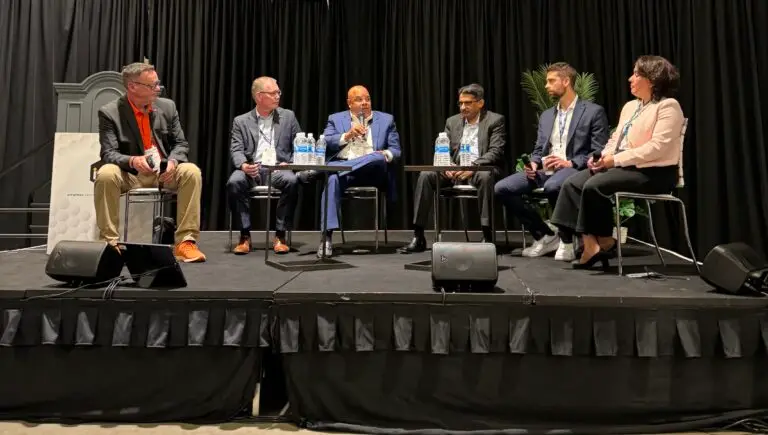
This month, the Chapter was honored to host Gil Santaliz, Founder and CEO of NJFX, NJFX; Raul Martynek, CEO, DataBank and Chris Downie, CEO, Flexential on a panel entitled ‘Operator Insights & AlwaysON Data Centers’.
There’s no question that data centers must engage in connectivity innovation. Data centers are a key hub in connectivity and essential to keeping businesses and IT infrastructures up and running.
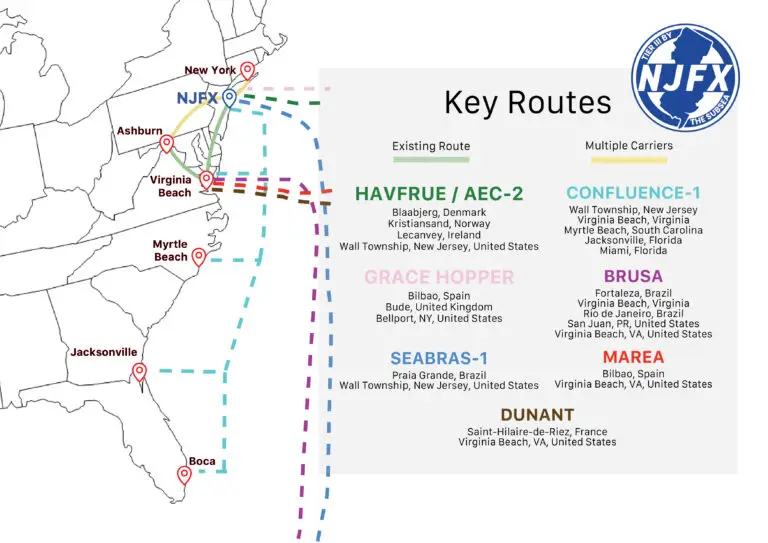
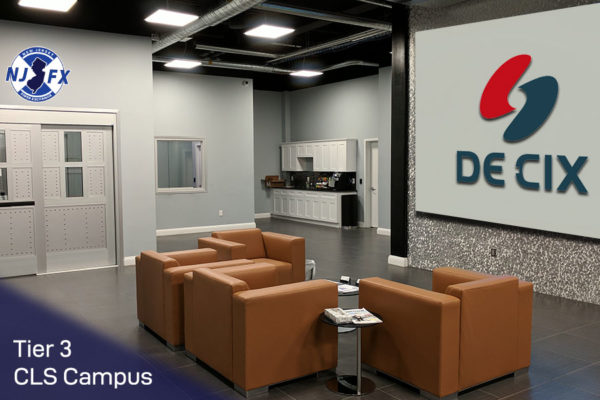
NJFX: NJFX started out as a Tier 3 data center facility that was purpose-built adjacent to TATA’s Cable Landing Station. From there, connectivity innovation led to a unique model. This model allows easier interconnection between subsea cable networks and terrestrial fiber networks. Today, NJFX is actually hosting subsea cables. NJFX welcomed the landing of the Havfrue/AEC2 subsea system connecting Wall, NJ to Norway, with branches to Denmark and Ireland. A total of 30 network providers are accessible at NJFX, interconnecting to four subsea networks.
DataBank: Starting with six data centers in three markets in 2005, DataBank grew to twenty data centers in nine markets.The company’s key focus for many years was on serving secondary Tier 2 markets. But in 2019, DataBank underwent connectivity innovation that resulted in two major deals. The company invested in modular data center provider, EdgePresence and acquired zColo data center assets from Zayo. Today, the company has 65 datacenters in 29 markets, including four markets in Europe.
As Martynek explained, “With both of those transactions, it was a pivot towards positioning ourselves to take advantage of what we see as the shift of internet infrastructure. The cloud has been a centralizing dynamic.” He adds that the sector is ripe for more connectivity innovation and should focus on delivering low cost solutions.
Flexential: Operates 40 data centers in 20 markets with 25 national peering points enabling its customers to distribute workloads and applications. The company is also host to two oversea fiber cables in Hillsboro, Oregon with a campus of facilities that serve as one of the most robust network centric platforms in the marketplace.
While all three companies have unique assets and strengths, common to all is the laser focus on their customers. At the top of the list for all three CEOs is improving the customer experience, along with having great customer relationships and building robust ecosystems with connectivity innovation. They all also place a high importance on their employees and building cohesive and collaborative teams and cultures.
As Santaliz noted, “It’s about developing that platform that is very repeatable, along with delighting your customers and celebrating their success. NJFX’s focus is on matching up our customers with others in our ecosystem to innovate, collaborate and increase value. Our customers find success in our model. Our team is seasoned and works hard to build a predictable and successful model to add more value for our clients.”
A key aspect of connectivity innovation is reliability and uptime in the face of any crisis. This was put to the test recently when extreme temperatures hit Texas. Flexential and DataBank both have multiple facilities in the state. All remained up and running with no customer impact during the many widespread power outages. Members of the panel discussed areas within the industry where there is room for more connectivity innovation and modernization. There is no doubt there will be many more industry conversations around addressing the challenges of improving infrastructure, along with exploring new technologies.
###
About NJFX:
NJFX is a Tier 3 Carrier Neutral Cable Landing Station campus. Our colocation ecosystem has expanded to over 35 network operators offering flexibility, reliability, and security. Our Wall, NJ location provides direct access to multiple subsea cable systems giving our carriers diverse connectivity solutions and offers direct interconnection without recurring cross-connect fees.









 If electricity fails, there are plans for backup power. But, if you lose your IT network, then operating a business becomes impossible. If your connectivity is based on only two or three traditional carriers, then it is time to ensure your understanding of whether or not those carrier assets are actually physically diverse.